Bollards installation — Pack Door
Gates and Access Control

Automatic Rising Bollard Systems

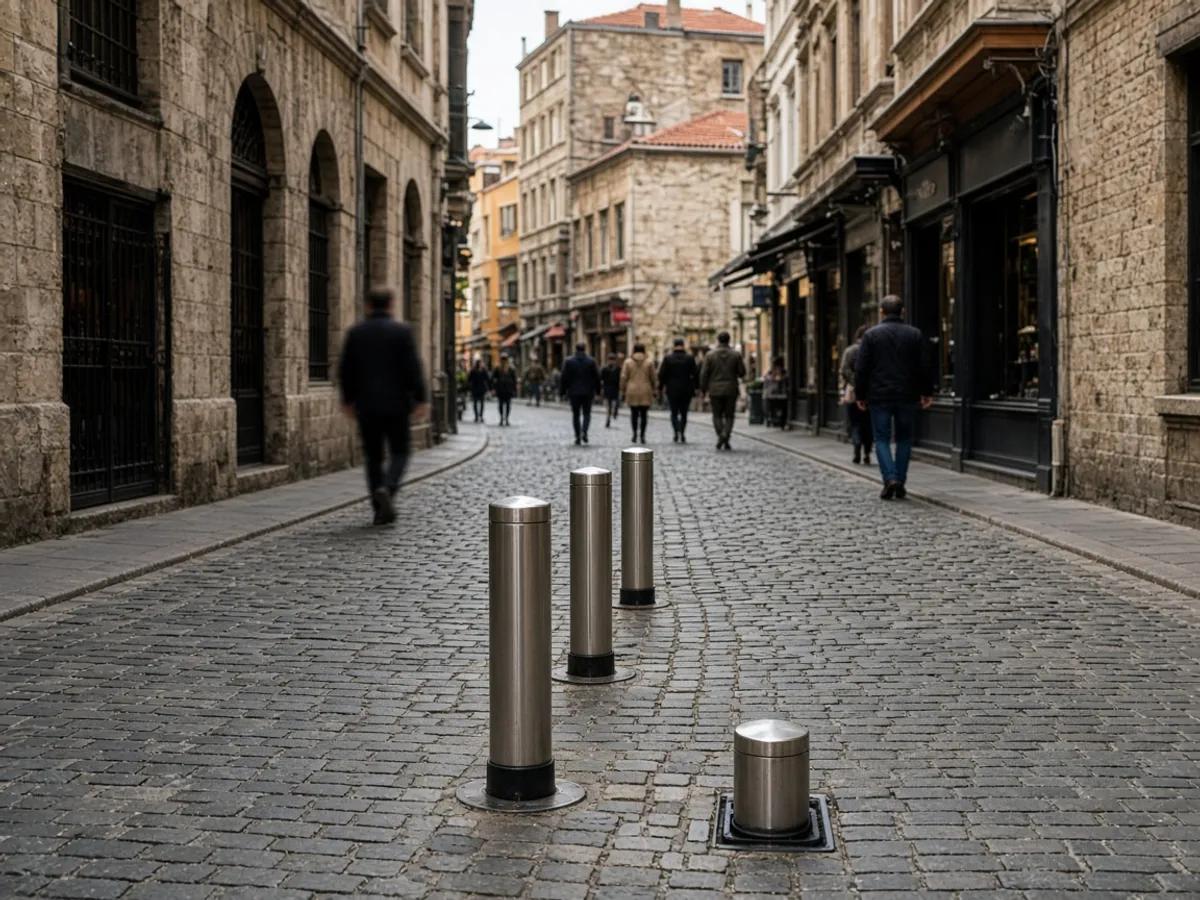
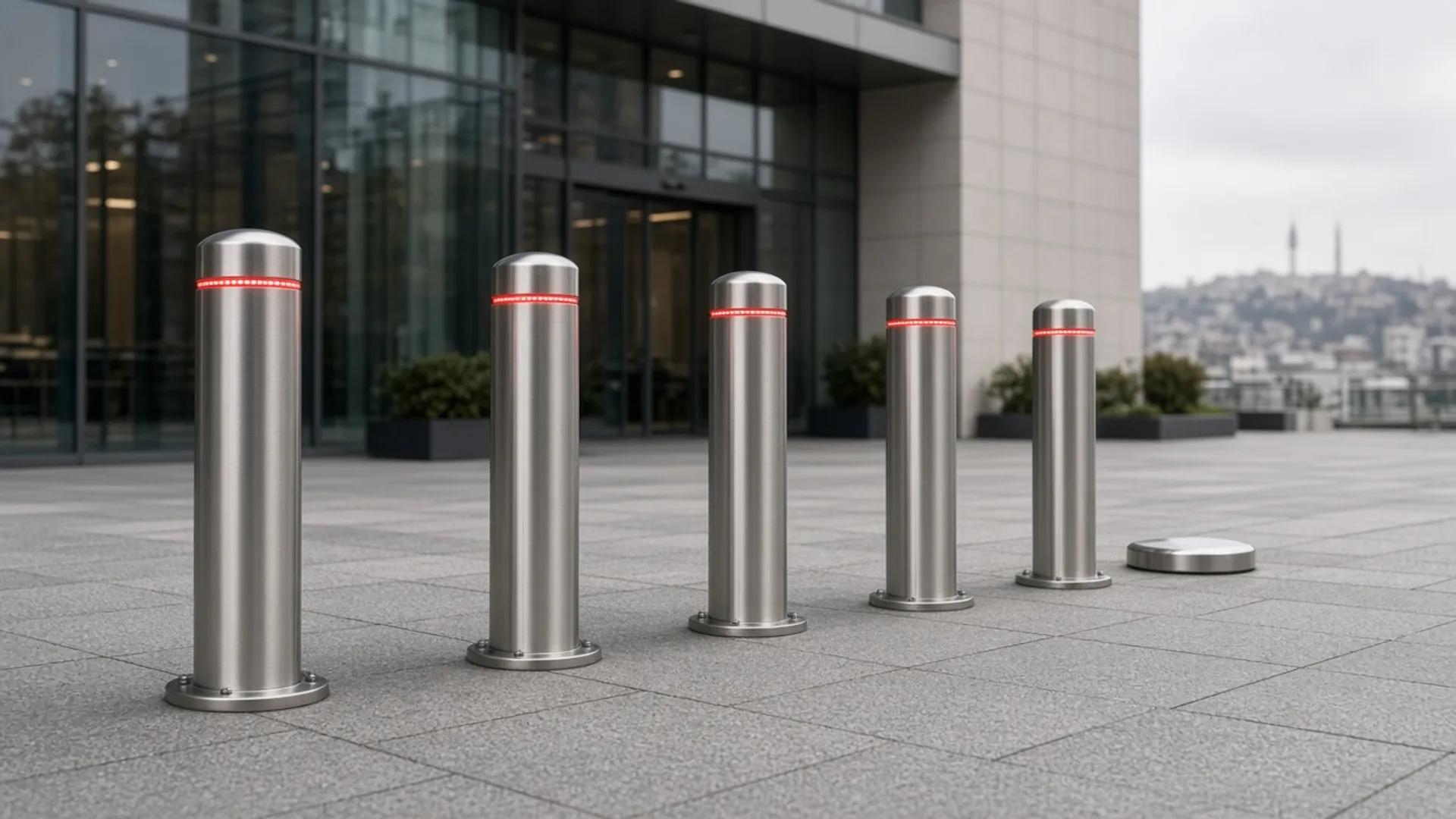
An automatic bollard is a vehicle access security system in which a cylindrical body set into the ground rises and lowers by hydraulic or electromechanical drive to control vehicle passage. When lowered it sits flush with the ground; when raised it physically blocks vehicles, working with an LED warning ring and access control integration.

Free site survey and price quote

Leave your details and we will call you back within 1 hour on average.

or call us now: +90 530 262 45 05

Rising height
500–800 mm
Bollard types
5
Body protection rating
IP67
Warning ring
LED

What are Bollards?

Rising bollards are the ideal vehicle access control solution for sites that want high security without compromising aesthetics. Because the body is fully set into the ground, it does not affect pedestrian or vehicle traffic when lowered, and it rises within seconds when an unauthorised vehicle is detected or as programmed.

Hydraulic series are preferred for high duty cycles and fast rising, while electromechanical series are chosen for low maintenance and quiet operation. Crash-rated models are specified for public, energy and diplomatic facilities that require high security.

The system integrates with remote controls, card access, automatic number plate recognition (ANPR), loop detectors and car park management software. During a power cut, safe operation continues via manual lowering or battery backup, and a rapid lowering scenario is defined for emergency vehicles.
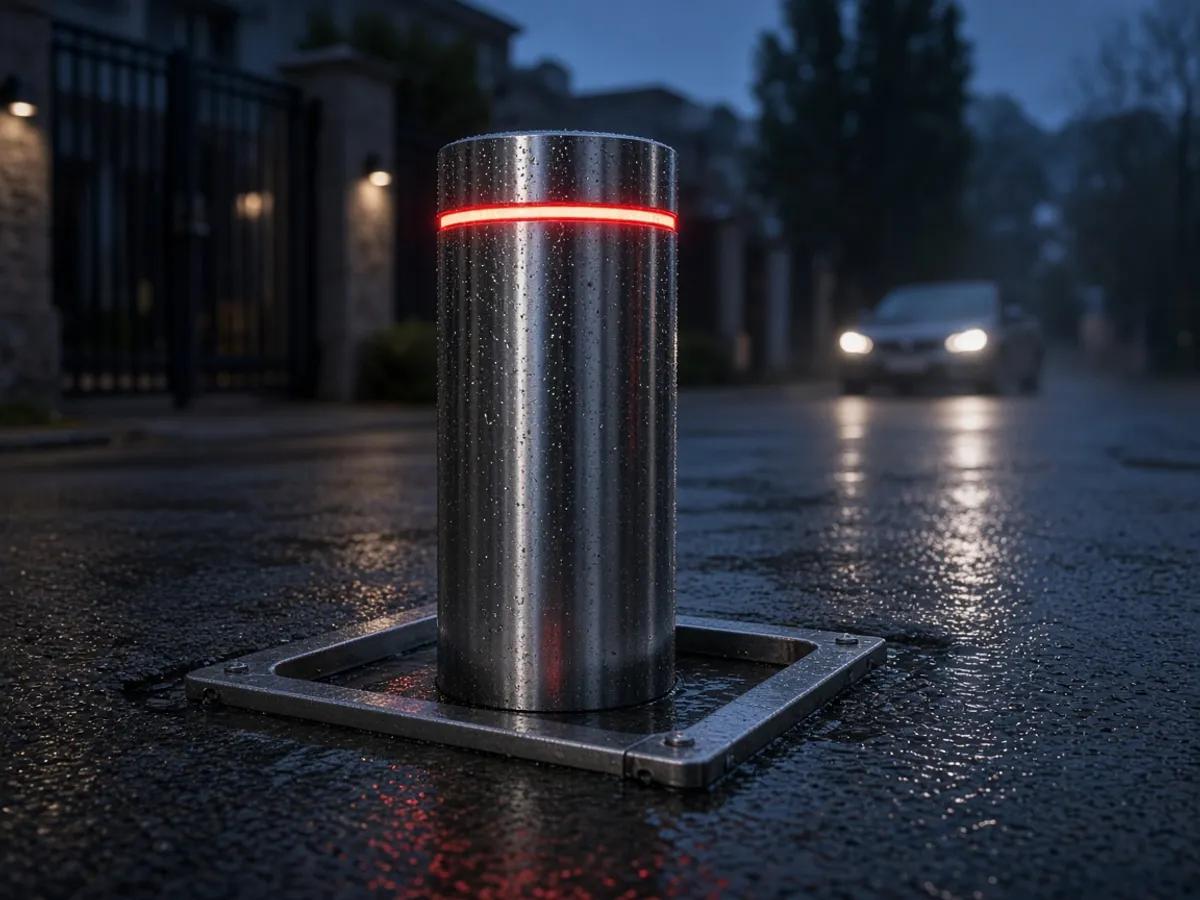
Bollards: project gallery

Click an image to enlarge it. You can request a site survey for a similar installation.

Bollards: series and models

Choose from 5 series according to your usage intensity, dimensions and security requirements. If you are undecided, we finalise the choice together during the site survey.

PD Bollard H — Hydraulic Automatic BollardPD Bollard H

Hydraulic Automatic Bollard

Main series with an integrated hydraulic unit for fast rising and high duty cycles.

Drive
Integrated hydraulic unit
Rising time
Approx. 3–6 s
Application
High duty cycle

Ideal for

  • Residential complex entrances
  • Office building and hotel frontages
  • High-traffic access points
Get a quote for this series

Benefits of Bollards

The features that make a difference on site and are asked about most during surveys.

Invisible security
Flush with the ground when lowered; does not affect architecture or traffic.
Fast rising
Rises within seconds to physically block unauthorised vehicles.
Visible warning
LED ring and reflective band for high visibility day and night.
Access integration
Fully compatible with ANPR, card access, remote controls and loop detectors.
Built for harsh conditions
IP67 body, drainage infrastructure and heater option for cold climates.
Emergency scenario
Manual lowering during power cuts and rapid opening for emergency vehicles.

Bollards: technical specifications

Values vary by series, size and project. Exact values are confirmed in writing in the quotation after the site survey.

Bollards technical specifications table
SpecificationValue
Body diameter220 – 275 mm (depending on model)
Rising height500 – 800 mm
Body materialPainted St37 steel or AISI 304/316 stainless steel
DriveHydraulic or electromechanical
Rising timeApprox. 3–6 s, with fast-rise option
Protection ratingIP67
WarningLED light ring, reflective band, optional audible alarm
IntegrationRemote control, card access, ANPR, loop detector

Technical data sheet and project drawings

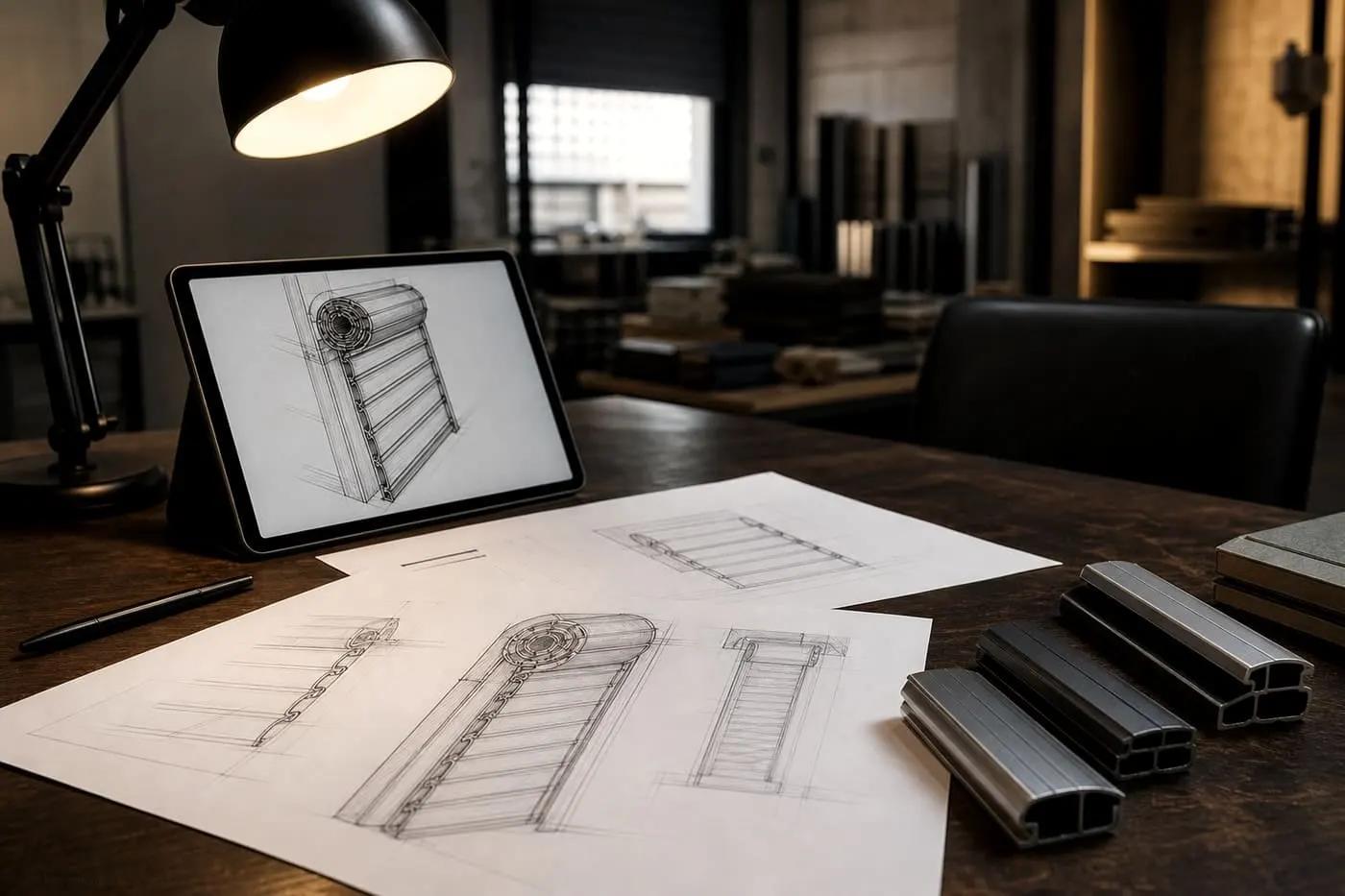
For architectural projects or tender documents, we email dimensioned drawings, technical data sheets and section details.

Request data sheet

Where are Bollards used?

Bollards are used in 6 different applications, including residential complexes, office building and hotel frontages, pedestrian zones, public buildings, energy and infrastructure, shopping malls and car parks. On every project, opening size, frequency of use and security requirements are assessed on site during the survey; the system is then made to measure and installed by our own crews.

Residential complexes
An aesthetic solution for controlling authorised vehicle entry.
Office building and hotel frontages
Controlled vehicle access in valet and guest areas.
Pedestrian zones
Streets closed to vehicle traffic at set times.
Public buildings
Perimeter protection with high-security models.
Energy and infrastructure
Protection against vehicle attacks at critical sites.
Shopping malls and car parks
Access control for service and loading areas.

How to choose the right bollards

A poorly chosen system means early failures, high energy costs or security gaps. Choosing the right bollards depends on opening size, daily frequency of use, security and insulation requirements, motor and automation type, and budget. Consider the points below when deciding; we finalise them together during the site survey.

  1. 1

    Security level

    Crash-tested high-security series are preferred for critical sites.

  2. 2

    Frequency of use

    The hydraulic series is recommended for hundreds of cycles per day.

  3. 3

    Maintenance and environment

    Choose the electromechanical series for oil-free, quiet operation.

  4. 4

    Ground and drainage

    Ground conditions, underground services and drainage are checked during the survey.

How we work: from site survey to service

The process has four steps: free site survey, design and quotation, manufacturing and installation, and service. We send a price quote within 1 hour on average after your survey request. The approved system is made to measure at our facility in Tuzla, Istanbul, installed and commissioned by our own crews, and supported by scheduled maintenance and a 24/7 breakdown line.

  1. Site survey

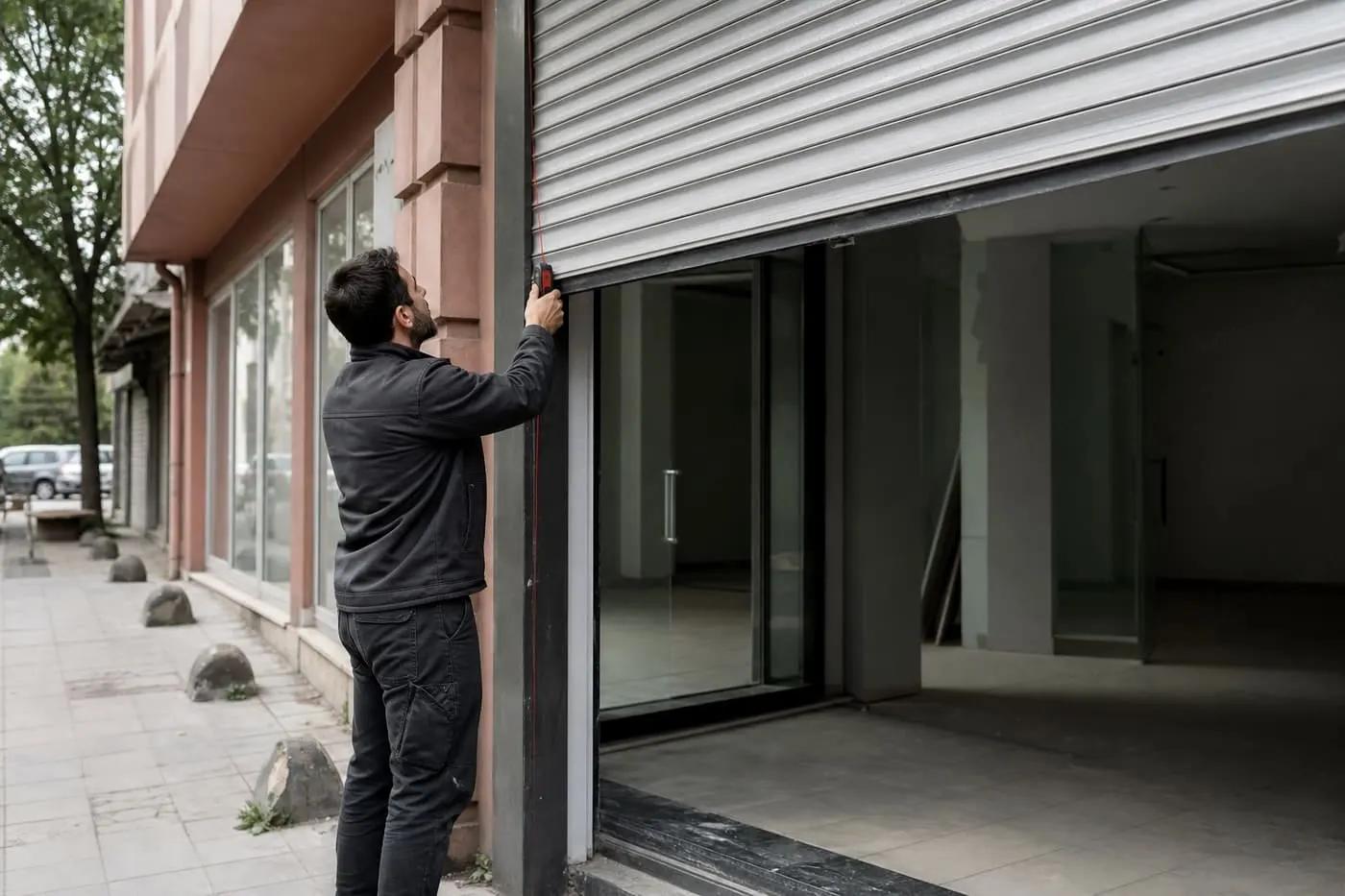
    Measurements are taken on site; usage intensity, electrical infrastructure and floor conditions are recorded.

  2. Design and quotation

    Series, motor and accessories are selected; the quote is itemised and includes installation.

  3. Manufacturing and installation

    Made to measure at our Tuzla facility and installed by our own installation crews.

  4. Service

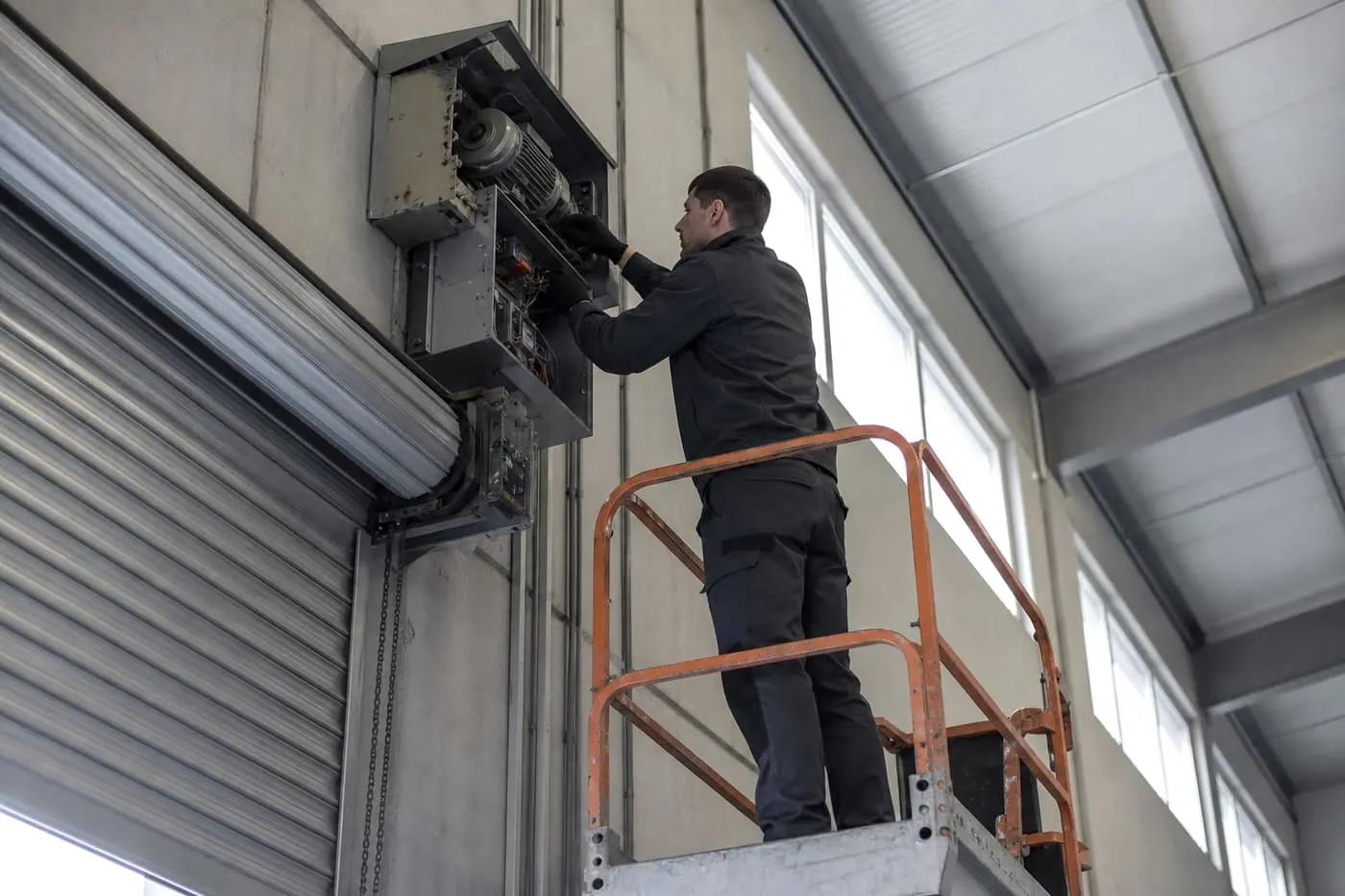
    Commissioning and user training, followed by scheduled maintenance and a 24/7 breakdown line.

Bollards: frequently asked questions

If your question is not answered here, ask us by phone or on WhatsApp.

What is an automatic bollard?

An automatic bollard is a vehicle access security system in which a cylindrical body set into the ground rises and lowers to control vehicle passage. When lowered it is flush with the ground. It operates by hydraulic or electromechanical drive and is controlled by card access, number plate recognition or remote control. It provides physical protection against vehicle attacks and unauthorised entry at embassies, public buildings, factories and residential complexes.

What is the difference between hydraulic and electromechanical bollards?

Hydraulic series offer fast rising and high duty cycle capacity. Electromechanical series use no oil, run more quietly and require less maintenance. Hydraulic bollards are preferred for high-traffic, high-security entrances, while electromechanical models suit medium-use areas such as residential estates and car parks. The choice is made during the site survey based on cycle count and security level.

What happens to a rising bollard during a power cut?

During a power cut, the bollard can be lowered by hand using its manual release valve or key to open the passage. If an optional battery unit is fitted, automatic operation continues throughout the outage with no security gap. Hydraulic models use a pressure release valve and electromechanical models a key-operated lock; the right method is chosen during the survey according to usage intensity.

Can a bollard work with number plate recognition?

Yes, an automatic bollard integrates with an automatic number plate recognition (ANPR) camera and lowers automatically when it recognises an authorised vehicle. It can also connect to card readers, remote controls, loop detectors and car park software. Entry and exit records are reported, and at high-security sites bollards, turnstiles and cameras are managed from a single control centre.

What is required to install a rising bollard?

Installing a rising bollard requires excavation for the foundation box, a concrete pour, a drainage connection and a cable duct. During the survey, ground conditions, underground services and water drainage are checked and a design is prepared. Once the civil works are ready, mechanical installation and commissioning are completed quickly; a clear schedule is shared after the survey.

Request a site survey for Bollards

Our team measures on site, assesses the operating conditions and prices the right system item by item. Site surveys are free in Istanbul and the surrounding provinces.

Sales and technical support

+90 530 262 45 05