Frequently asked questions
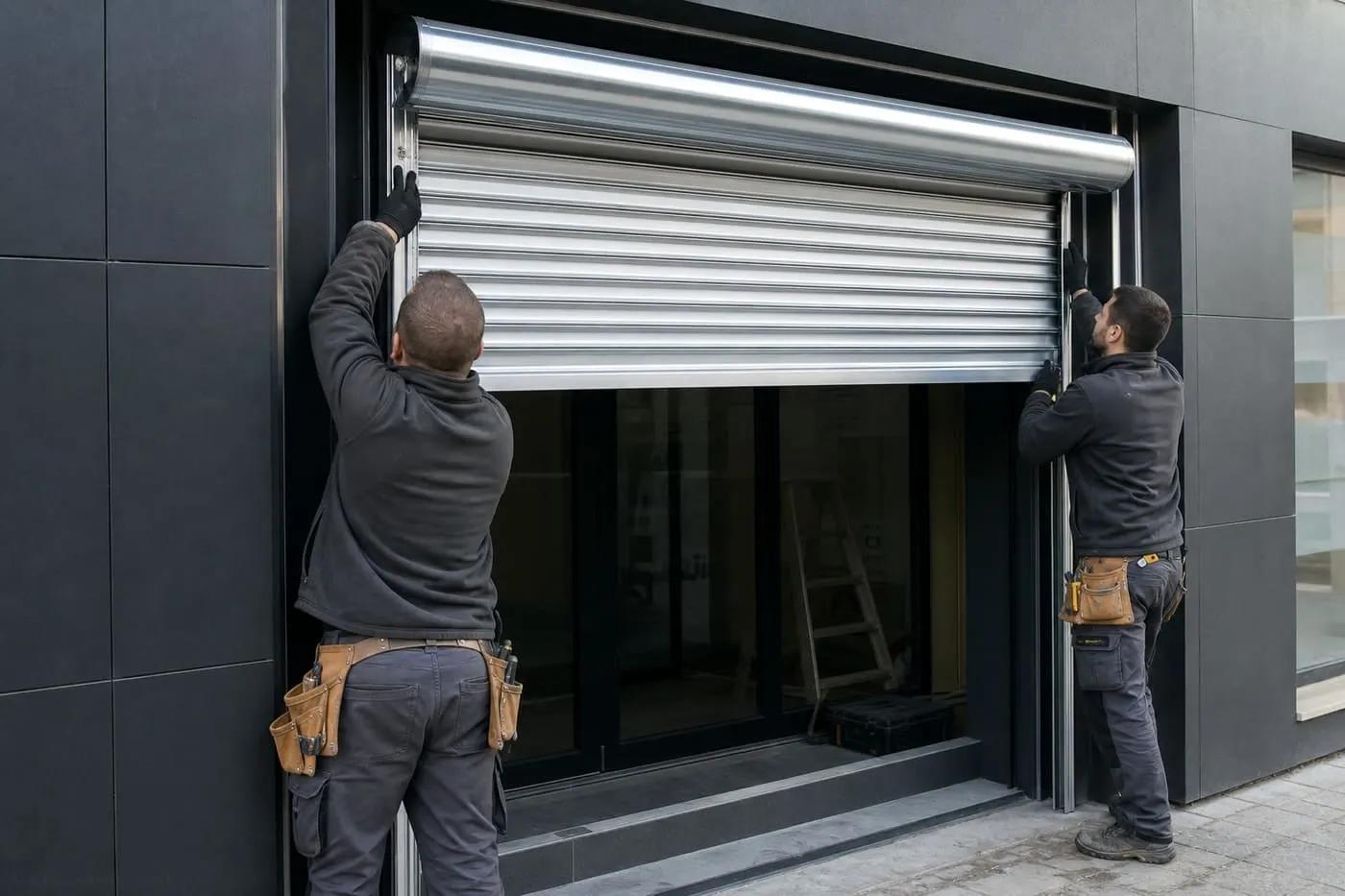
What determines the price, which motor should you choose, how many days does installation take? We have gathered the 48 questions we hear most often during site surveys into 5 product groups. In short: price depends on size, material and motor; roller shutter installation is usually completed on the same day, and quotes are prepared within 1 hour on average.
General questions
About quotes, site surveys, installation and service.
Which door systems does Pack Door manufacture and install?
Pack Door supplies galvanised steel and aluminium roller shutters, aluminium window shutters, decorative garage doors, industrial sectional doors, hydraulic dock levellers, high-speed PVC doors, fire-rated roller shutters, fire doors, automatic sliding doors, revolving doors, rising bollards, car park barriers and sliding garden gates under one roof.
Are the site survey and quotation free of charge?
Yes. Site surveys are free in Istanbul and the surrounding provinces. Our technical team takes measurements on site and checks usage intensity and the electrical infrastructure. Following this needs analysis, we prepare your written quotation, including material, motor and accessory options, within 1 hour on average and send it by email or WhatsApp.
Which regions do you serve?
Our headquarters and production facility are in Tuzla, Istanbul. We provide site surveys, installation and service in all 39 districts of Istanbul (100% coverage). Kocaeli, Sakarya, Tekirdağ and Bursa are regular service areas; in Ankara, Izmir and other provinces we carry out project-based surveys and dispatch installation crews for industrial and corporate projects.
Which standards do your products comply with?
Industrial and garage doors are built to EN 13241 and EN 12453, fire doors to EN 1634-1 and EN 13501-2, and automatic pedestrian doors to EN 16005. Depending on project requirements, test reports, CE documentation, a user manual and maintenance instructions are provided at handover; these documents can be used for occupancy permit and insurance processes.
Do you provide breakdown and maintenance service?
Yes. In addition to the systems we install ourselves, we service roller shutters, industrial doors, automatic sliding doors and barrier systems from other brands. With scheduled maintenance contracts, a spare parts stock and a 24/7 breakdown line, our team is dispatched to site as quickly as possible in emergencies and faulty parts are replaced from stock.
Can my existing manual roller shutter or door be motorised?
In most cases, yes. During the survey we check the condition of the existing slats, shaft, guide rails and box; if the structure is sound, the system is automated with a tubular or side motor sized to the door weight, a remote control and safety accessories. This gives you the convenience of motorised operation at a much lower cost than a complete replacement.
Rolling Systems
View product groupGalvanised Steel Roller ShutterGalvanised Steel Roller Shutter details
What is a galvanised steel roller shutter?
A galvanised steel roller shutter is a motorised security closure in which galvanised steel slats coil around a barrel to seal an opening. Pack Door manufactures them to measure with 77, 97 and 115 mm slat options. They provide strong protection against burglary for shop, warehouse, factory and car park entrances, and are installed with a tubular or side motor, remote control and emergency release system.
What slat thickness should a steel roller shutter have?
Typical slat thickness ranges from 0.75 to 1.20 mm. For shops, 0.75–0.90 mm is usually sufficient, while warehouses, industrial sites and wide, wind-exposed openings call for 1.00–1.20 mm slats and an industrial motor. The correct thickness is determined during the site survey based on opening width, frequency of use and wind load; an intermediate post is added if required.
What is the difference between galvanised and polyurethane-filled roller shutters?
A galvanised steel roller shutter uses single-skin, high-strength slats that prioritise security and is preferred for shop and warehouse entrances. A polyurethane-filled roller shutter uses double-skin slats with a foam core, providing thermal and acoustic insulation and quieter operation. Polyurethane-filled shutters are recommended for heated spaces; galvanised steel is recommended where high security is required.
Aluminium Roller ShutterAluminium Roller Shutter details
Should I choose an aluminium or a galvanised steel roller shutter?
Choose aluminium if corrosion resistance, light weight and shop-front aesthetics are the priority; choose galvanised steel for maximum impact resistance and warehouse or industrial use. The right range is recommended during the site survey based on the application. Because aluminium shutters are lighter, they run on a smaller motor, while galvanised steel is economical and durable for wide openings.
Do aluminium roller shutters rust?
No. Aluminium does not rust thanks to its natural oxide layer. With an anodised or powder-coated finish, it keeps its appearance for many years, even in coastal and humid environments. This makes it longer-lasting than galvanised steel for seaside shops, pool and leisure facilities, and humid production areas. Periodic cleaning and guide rail maintenance are sufficient.
How secure is an aluminium roller shutter?
An aluminium roller shutter is secure thanks to the high strength of its extruded aluminium slats. With heavy-gauge profiles, a bottom lock and reinforced guide rails, it is also used at high-risk premises such as jewellers and exchange offices. Its light weight reduces motor wear and it does not rust; alarm integration and anti-lift locks can be added for extra security.
Aluminium Window ShutterAluminium Window Shutter details
What is the difference between surface-mounted, concealed and monobloc window shutters?
A surface-mounted shutter is retrofitted to existing windows and its box is visible on the façade. A concealed shutter has its box recessed into the wall cavity. A monobloc shutter has its box integrated into the window frame. Concealed and monobloc shutters show no box from outside. Monobloc or concealed shutters are preferred for new buildings, and surface-mounted shutters for existing buildings.
What is the difference between motorised and automatic window shutters?
A motorised shutter runs on a tubular motor and is operated by remote control or switch. An automatic shutter is a motorised system with added sun and wind sensors, timers and smart home integration; it is a control level, not a mounting type. An existing motorised shutter can be upgraded to automatic operation by adding sensors and a smart module.
Can a manual window shutter be converted to motorised?
Yes. A suitable tubular motor can be fitted to the barrel of an existing manual shutter to convert it to motorised operation; in most cases the box does not need replacing. The motor torque is matched to the shutter weight, and a remote control or wall switch is added; a smart home module can also enable phone control. The conversion takes about 1–2 hours per window.
Industrial Systems
View product groupDecorative Garage DoorsDecorative Garage Doors details
What is the difference between a sectional garage door and a roller shutter?
In a roller shutter, the slats coil around a barrel; in a sectional garage door, insulated panels park horizontally under the ceiling. A sectional garage door offers better insulation, quieter operation and a decorative appearance, while a roller shutter has the advantage in commercial openings that require higher impact resistance and minimal headroom. Sectional doors are generally preferred for homes and villas, and roller shutters for shops and warehouses.
How much headroom does a garage door need?
A standard lift sectional garage door needs approximately 350–400 mm of headroom, while a low-headroom lift requires less. The exact figure is measured during the site survey. About 100–150 mm of side room is also needed on each side. If headroom is insufficient, a low-headroom track system or a front lintel solution is used, and ceiling depth for the motor is checked separately.
Can a garage door be opened during a power cut?
Yes. During a power cut, a garage door can be opened by hand using the manual release on the motor. Thanks to the spring balancing system, the panel weight is barely felt and the door lifts easily. If an optional battery module is fitted, motorised operation continues throughout the outage, and a key-operated emergency release kit can be added for external access.
Industrial Sectional DoorsIndustrial Sectional Doors details
What is a sectional door?
A sectional door is an automatic door made of hinged horizontal panels that open vertically and park horizontally under the ceiling. Its sandwich panel construction offers thermal and acoustic insulation, space saving and security. Sectional doors are used at factory, warehouse, logistics centre and car park entrances. Pack Door manufactures EN 13241-compliant sectional doors to measure with 42 mm or 60 mm panel options.
Which door is suitable for a factory entrance?
An industrial sectional door is the preferred choice for heavy forklift and truck traffic. It is configured with 42 mm panels, a robust spring system, photocells and a high cycle rating; for very frequent internal traffic it can be combined with a high speed PVC door. At loading points, the door is designed together with a hydraulic dock leveller and dock shelter.
What is the maximum size of a sectional door?
A single-leaf sectional door can be made to measure up to 7500 mm wide and 6000 mm high. For wider openings, multiple doors with intermediate posts or a project-specific custom solution are developed. Panel thickness, wind load and lift type are calculated for the dimensions, and the quote is finalised after the site survey and technical drawing.
Hydraulic Dock LevellersHydraulic Dock Levellers details
What is a dock leveller?
A dock leveller (loading ramp) is a hydraulic system that compensates for the height difference between a warehouse or factory loading platform and a truck bed, enabling safe forklift loading and unloading. It is available in hinged lip, telescopic lip and vertical types, and is usually installed together with a sectional door and dock shelter. The right leveller is chosen according to truck bed height, forklift load and the number of daily loadings.
Which type of dock leveller should I choose?
A hinged lip leveller suits standard loading pits, a telescopic lip suits distant truck beds and containers, and a vertical leveller suits areas where a pit cannot be built. A dock shelter is added for thermal and weather protection. Load capacity is usually selected in the 6–8 tonne range, and the decision is made during the site survey by measuring platform height and vehicle types.
What is the standard load capacity of a dock leveller?
Common dock leveller capacities are 6, 8 and 10 tonnes. The correct capacity is determined by the combined weight of the forklift and the load it carries; 8–10 tonnes is preferred for intensive logistics operations. Dynamic load, the number of daily loadings and differences in truck bed height are also taken into account.
High Speed PVC DoorsHigh Speed PVC Doors details
What is a high speed PVC door?
A high speed PVC door is an industrial door with a PVC curtain that opens and closes at high speed. It accelerates forklift and pedestrian traffic while controlling energy loss and dust. With opening speeds of up to 1–2 metres per second, it is widely used in food, pharmaceutical, logistics and cold storage facilities. Thanks to radar, photocells and a soft curtain, it protects itself on impact and re-engages its guides automatically.
What is the difference between a high speed PVC door and a roller shutter?
A roller shutter is a security closure that usually stays closed outside working hours. A high speed PVC door is a fast-acting air curtain that preserves the indoor climate on frequently used lines during the working day. Most facilities use both together, and they are planned jointly during the site survey based on traffic frequency and security needs.
Which type of high speed PVC door should I choose?
The high speed PVC door type depends on the application: roll-up doors suit heavy internal traffic, fold-up doors suit wide openings and wind-exposed external façades, and insulated doors suit cold storage warehouses and food facilities. The choice takes into account the number of daily cycles, opening size, hygiene requirements and forklift traffic together.
Fire-Rated Systems
View product groupFire-Rated Roller ShutterFire-Rated Roller Shutter details
What is a fire-rated roller shutter?
A fire-rated roller shutter (fire shutter) is a steel rolling system that closes automatically in a fire to separate two spaces. It delays the spread of flames and smoke, buying time for evacuation and firefighting. It is connected to the fire alarm system and also closes under controlled gravity when power fails. Fire shutters are produced in EI60–EI240 classes with EN 1634-1 test reports and used in shopping malls, car parks and industrial facilities.
What is the difference between EI60 and EI240?
The EI class expresses integrity (E) and insulation (I) in minutes according to EN 13501-2. EI60 means 60 minutes of fire resistance, while EI240 means 240 minutes, or 4 hours. The required class is determined by the building type, the fire compartment and the calculation under the applicable fire protection regulation. The project designer or fire authority report confirms this value.
How does a motorised fire shutter work?
A motorised fire shutter closes automatically via its motor or gravity system when it receives a signal from the fire detection panel. A fusible link triggers mechanical closing at 73 °C. If the power fails, fail-safe gravity closing takes over, so the compartment is protected in all conditions and the spread of smoke and flames to other areas is delayed.
Fire DoorsFire Doors details
What is a fire door?
A fire door is a self-closing steel safety door that delays the passage of flames, hot gases and smoke into adjacent spaces for a defined period. It is tested to EN 1634-1 and classified E/EI. Fitted with a panic bar, door closer and smoke seal, it is required by regulation in stairwells, boiler rooms and car park passages.
What is the difference between EI60, EI90 and EI120?
E stands for integrity and I for thermal insulation; the number indicates minutes. EI60 limits the passage of flames and heat for 60 minutes, EI90 for 90 minutes and EI120 for 120 minutes. The class is selected according to the room type and the regulatory calculation. On handover, a test report showing the class, a CE declaration and a door label are provided.
Why must a fire door be self-closing?
A fire door must be self-closing because a door left open removes the compartment and allows smoke and flames to pass into other areas. A hydraulic closer returns the leaf to the frame, and on double doors a selector maintains the closing sequence. Wedging a fire door open breaches the regulations; if it must stay open, a magnetic hold-open linked to the fire panel is used.
Automatic Doors
View product groupAutomatic Sliding DoorsAutomatic Sliding Doors details
What is an automatic sliding door?
An automatic sliding door is a touch-free entrance system that detects approaching people with sensors, opens its glass leaves by motor and closes them after the passage. It provides hygiene, accessibility and energy efficiency at shop, shopping mall, hospital, hotel and office entrances. It is installed in sliding, telescopic and hermetic versions in compliance with EN 16005 and supported by periodic maintenance.
What happens to an automatic door during a power cut?
Systems fitted with a battery module keep running for a set period during an outage or move the door to the open position. Without a battery, the leaves can be slid open by hand while the lock is released. On emergency exit routes, it is preferable for the door to open automatically during an outage. Battery capacity and the outage scenario are defined before installation according to the building’s use.
Are automatic sliding doors safe?
Yes, EN 16005 compliant automatic sliding doors are safe. A radar sensor detects approaching people and active infrared safety sensors continuously scan the leaf movement area; if a person or obstacle is detected, the door does not close or reopens. Leaf speed and closing force are limited, and sensor settings are tested separately during periodic maintenance.
Revolving Door SystemsRevolving Door Systems details
What is a revolving door?
A revolving door is an entrance system in which several wings rotate around a central axis to let people through. It reduces draughts between inside and outside, saving energy and adding prestige. It is widely used at hotel, office, hospital and shopping mall entrances. Revolving doors are produced with three or four wings in automatic or manual versions, usually with an automatic sliding door or hinged door alongside for emergency exit.
Which type of revolving door should I choose?
The standard series is the classic 3–4 wing door, the all-glass series offers architectural prestige, Duo provides high capacity and the manual series is a cost-effective motorless solution. The choice depends on traffic, diameter and budget. Large-diameter automatic series suit entrances with heavy daily footfall, while all-glass series stand out in boutique hotels and offices. Entrance width and ceiling height are measured during the site survey.
What is a typical revolving door diameter?
The common internal diameter range for revolving doors is 1600–3800 mm. Medium diameters are preferred at hotel, office and hospital entrances, while larger diameters can be specified for shopping malls and airport terminals. The right diameter depends on peak-hour throughput, luggage or shopping trolley traffic and the size of the entrance lobby.
Gates and Access Control
View product groupBollardsBollards details
What is an automatic bollard?
An automatic bollard is a vehicle access security system in which a cylindrical body set into the ground rises and lowers to control vehicle passage. When lowered it is flush with the ground. It operates by hydraulic or electromechanical drive and is controlled by card access, number plate recognition or remote control. It provides physical protection against vehicle attacks and unauthorised entry at embassies, public buildings, factories and residential complexes.
What is the difference between hydraulic and electromechanical bollards?
Hydraulic series offer fast rising and high duty cycle capacity. Electromechanical series use no oil, run more quietly and require less maintenance. Hydraulic bollards are preferred for high-traffic, high-security entrances, while electromechanical models suit medium-use areas such as residential estates and car parks. The choice is made during the site survey based on cycle count and security level.
What happens to a rising bollard during a power cut?
During a power cut, the bollard can be lowered by hand using its manual release valve or key to open the passage. If an optional battery unit is fitted, automatic operation continues throughout the outage with no security gap. Hydraulic models use a pressure release valve and electromechanical models a key-operated lock; the right method is chosen during the survey according to usage intensity.
Barrier SystemsBarrier Systems details
What is an automatic barrier?
An automatic barrier is an entry control system in which an arm attached to a motorised housing lifts to allow vehicles through. It works with card access, number plate recognition and loop detectors, and is used at car park, residential complex, factory and office entrances. Arm length, opening time and daily traffic volume determine the right model; Pack Door handles installation, card system integration and periodic maintenance as a single provider.
Can a barrier arm come down on a vehicle?
No. The arm does not lower while the underground loop detector and photocell detect a vehicle. This dual-layer safety prevents damage to both vehicle and arm. A rubber impact profile and LED light can also be fitted to the arm tip. During installation, loop detector sensitivity and photocell position are set for the vehicle types, and these safety devices are tested during periodic maintenance.
Can a barrier work with number plate recognition?
Yes, an automatic barrier works with an automatic number plate recognition (ANPR) camera that identifies authorised vehicles and raises the arm automatically. Entry and exit records are reported in the software, and time-limited permissions can be set for visitor vehicles. The system can also be managed from a single panel alongside card access, remote controls, loop detectors and property management software.
Sliding and Garden GatesSliding and Garden Gates details
What is a sliding garden gate?
A sliding garden gate is an automatic perimeter gate whose leaf moves horizontally along the wall under motor drive to open and close the entrance. It is produced with galvanised steel or aluminium leaves in tracked or cantilever (trackless) versions. With remote control, photocells, battery-backed motors and smartphone opening, it is installed made to measure at residential complex, villa and factory entrances.
What is the difference between tracked and cantilever gates?
On a tracked gate, the leaf runs on a ground track. On a cantilever gate, the leaf is carried on support rollers outside the opening; with no ground track, it is unaffected by snow, ice and sand. The tracked system is more economical, while the cantilever system is preferred for uneven ground or heavy-duty entrances and requires extra wall length beside the leaf.
How do you choose a gate motor?
A gate motor is selected according to the leaf weight, opening width, gate type and daily cycle count. Motor capacities range from 400 kg to 2500 kg. For heavy use such as residential complex entrances, industrial-grade motors with battery modules are preferred, while standard motors are sufficient for villas and detached houses.
Contact us for a site survey and price quote
Our team measures on site, assesses the operating conditions and prices the right system item by item. Site surveys are free in Istanbul and the surrounding provinces.