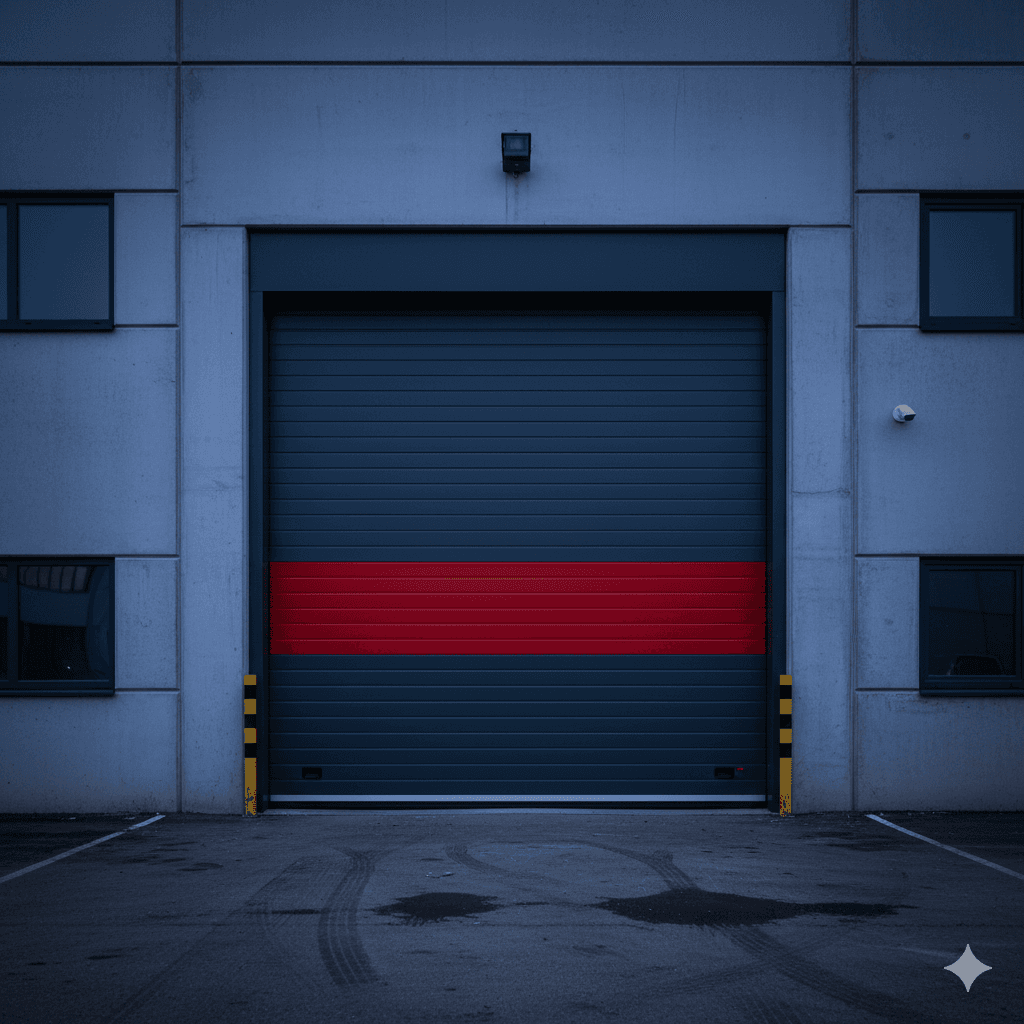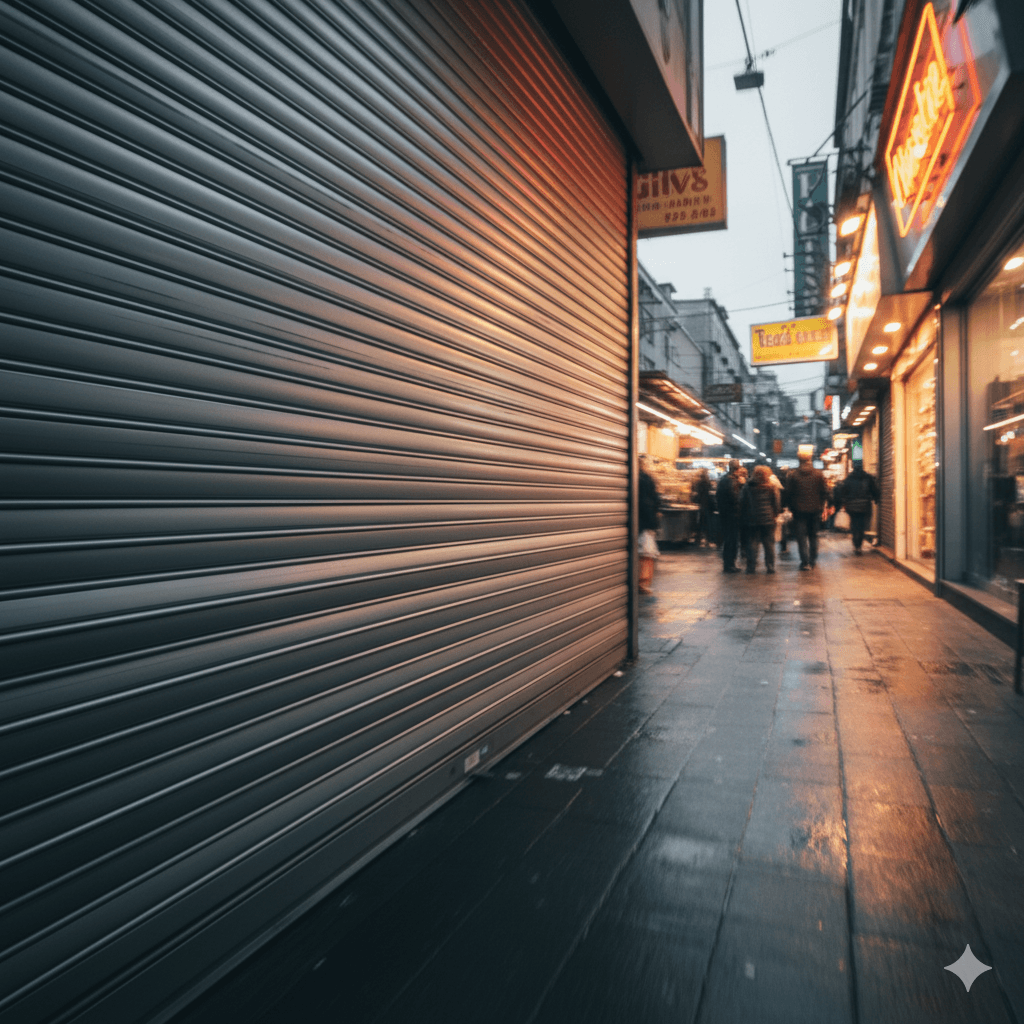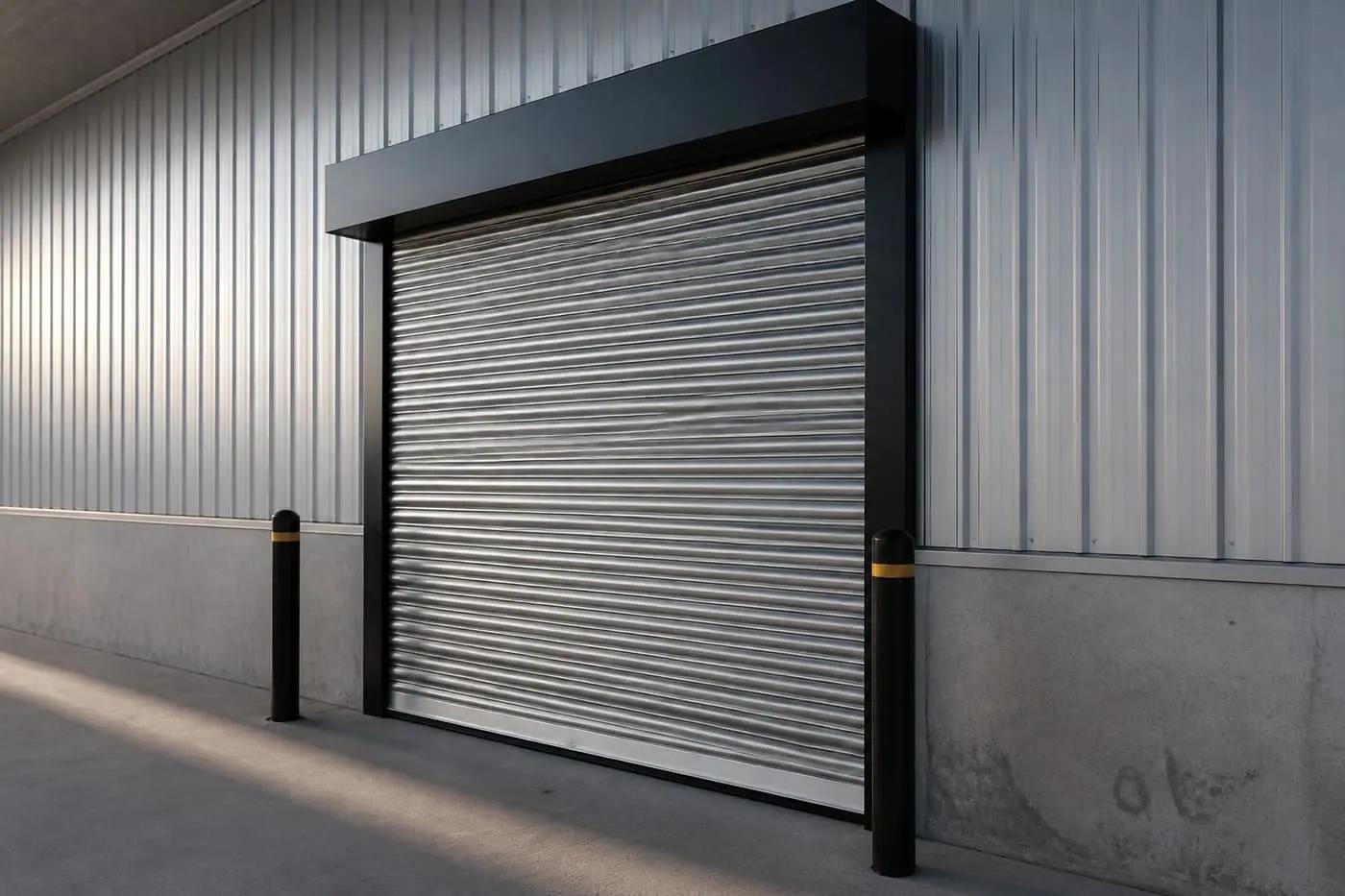
Short answer: Winter preparation consists of cleaning the guide rails and bottom seals, lubricating moving parts with the right product, testing the motor limits and safety sensors, and checking drainage and insulation points. The most important rule is never to force a frozen door with the motor: repeated attempts permanently wear the motor, the shaft and the slats.
When temperatures fall, three things change at once in a door system: lubricants thicken, moisture condenses and turns to ice, and the starting load on the motor rises. A galvanised steel roller shutter that ran smoothly all summer may stop halfway on the first cold morning, an industrial sectional door may lift sluggishly, and a barrier arm may respond late. This guide lists the checks to complete before winter by product type and explains how to deal safely with a frozen door.
How does cold weather affect doors and shutters?
Most winter faults do not have a single cause; they appear because the cold affects several components at the same time. Reading the symptoms correctly avoids unnecessary part replacement.
Thickened lubricants and friction
Grease in shaft bearings, rollers and hinges loses its fluidity at low temperatures. The door moves more slowly with the same motor, struggles at start-up and becomes noisy. This can trigger the motor's thermal protection and leave the door out of action for a while.
Moisture, condensation and icing
Surfaces that warm up during the day and cool at night collect condensation. Water that gathers in the guide rails, in the bottom seal and between the slats freezes overnight. The bottom seal sticks to the floor and ice inside the rail blocks the slats. Blocked drainage at the foot of the rails makes the problem worse.
Wind and snow load
On wide openings, winter storms put considerable load on the curtain. If the lock, rail fixings or wind hooks are weak, the curtain flexes inside the rail and jams when closing. Snow building up on roofs and eaves can also let water into the shutter box.
Which checks should be done on a roller shutter before winter?
The steps below can be carried out by the user; work on the motor, springs or electrics is a job for the service team.
- Rail cleaning: Remove dust, leaves and sand from the rails with a brush. Do not apply grease to shutter rails; it collects dirt and hardens in winter. If needed, use a light silicone spray.
- Bottom seal: Replace a torn, hardened or crushed bottom seal. A healthy seal reduces cold draughts and stops the curtain sticking to the floor.
- Drainage: Make sure the drainage points at the foot of the rails are clear.
- Open-close observation: Note the time and noise of a full opening and closing cycle. Noticeable slowing or catching should be reported to service.
- Safety test: On systems with a photocell or safety edge, check that the door stops and reverses when it detects an obstacle while closing.
- Manual opening: The crank handle or release used during power cuts must be in place and working.
For a detailed periodic plan, see our galvanised steel shutter maintenance schedule and our aluminium roller shutter maintenance guide.
How should sectional and industrial doors be prepared for winter?
Sectional doors balance their weight with torsion springs. In the cold, spring steel works under higher tension, and a fatigued spring is more likely to break in winter. If the door does not stay in place when released by hand at half height, and instead drops or rises, the balance is off and the spring must only be adjusted by authorised service.
- Apply light machine oil to hinge and roller bearings; do not oil the track surface.
- Check the seals between panels and at the bottom; on insulated panel doors, seal loss is the main cause of heat loss.
- Repair damage to dock shelters and bumpers in the loading area before winter.
- Shorten the time frequently used openings stay open; in very busy passages a high-speed PVC door can noticeably reduce heat loss.
What should you watch on barriers and sliding gates?
Systems that work outdoors are the most exposed to winter. On barrier systems, photocell lenses get covered by snow, mud and mist; clean them with a soft cloth and test detection. On systems with battery backup, cold reduces battery capacity, so have the battery age and charge measured before winter. On sliding gates, ice and stones in the ground track can derail the wheel; keep the track clear and do not pile snow onto it.
Which symptoms call for a service visit before winter?
Some symptoms seem tolerable in summer but quickly turn into breakdowns in the cold. If you notice any of the following, have the system checked before the first frost:
- One side of the door comes down ahead of the other, or the curtain runs crooked in the rail.
- The motor hums at start-up and the door moves with a delay of a few seconds.
- The door does not stop at its limit; it presses into the floor or stops before fully closing.
- The remote control range has shortened noticeably, or commands are occasionally missed.
- There are dents, cracks or water marks on the slats, panels or box cover.
These symptoms usually point to a shifted limit, bearing wear, poor balance or a cable connection problem. In winter the same fault recurs more often and can leave the door stuck open or closed, affecting both site security and daily operations.
Winter maintenance checklist
| System | User check | Service check |
|---|---|---|
| Steel and aluminium roller shutter | Rail and bottom seal cleaning, open-close observation | Motor, limit settings, shaft and lock |
| Sectional door | Hinge and roller lubrication, seal check | Torsion spring balance, cables and safety devices |
| High-speed PVC door | Curtain and sensor cleaning | Motor, drive and speed settings |
| Barrier | Photocell lens cleaning, arm movement observation | Battery, balance spring, control board |
| Sliding gate | Ground track and wheel path cleaning | Motor gear, rack and limits |
How do you open a frozen or jammed shutter?
Mistakes made when a door freezes cause the most expensive winter repairs. The safe sequence is:
- Do not run the motor repeatedly. If the door does not open after two attempts, stop.
- Gently remove ice from the bottom seal and the foot of the rails with a plastic scraper. Do not pour boiling water; it refreezes and damages the seal.
- Apply de-icer spray sparingly, only to the seal and the foot of the rails.
- If the door has partly opened, check that the slats enter the rails straight; do not force a door that is running crooked.
- If the motor runs but the door does not move, or it makes unusual noise, call service.
Frequently asked questions
When should winter maintenance be done?
The ideal time is October to November, when night temperatures start approaching zero. A check before the first frost catches problems before the door becomes unusable.
Which lubricant should be used on shutter rails?
Do not apply grease or heavy oil to the rails. After cleaning, a light silicone spray is enough if needed. Light machine oil is suitable for shaft bearings and hinges.
Why does a shutter motor stop in the cold?
Thickened lubricant and ice resistance increase the load on the motor, and the thermal protection cuts the circuit to protect it. The motor works again once it cools, but if the problem repeats, have the friction and limit settings checked.
How do you open a shutter during a power cut?
Motorised shutters are opened manually with a crank handle or emergency release. Learning where this equipment is and how to use it before winter saves time during an outage.
Why do sectional door springs break in winter?
Spring steel fatigues with every cycle; in the cold the material behaves more brittly, and springs at the end of their life tend to break in this period. If you notice the balance is off, stop using the door and call service.
Conclusion and next step
The aim of winter preparation is to offset the effect of cold on lubricants, moisture and load before it causes a breakdown. Cleaning, seals and observation are for the user; motor, spring and safety settings belong to authorised service. To plan a pre-winter check of the shutters, doors and barriers at your site, request a free site survey; our technical team replies within an hour on average.