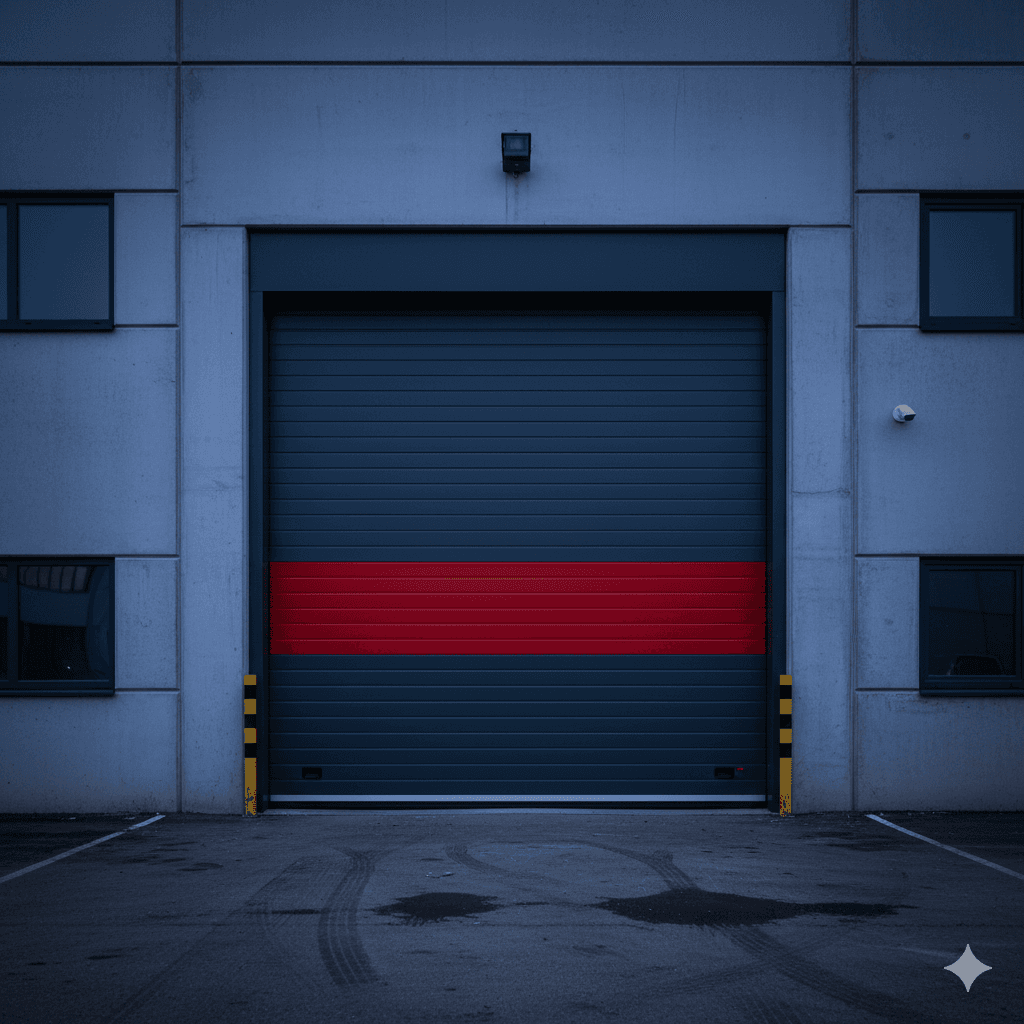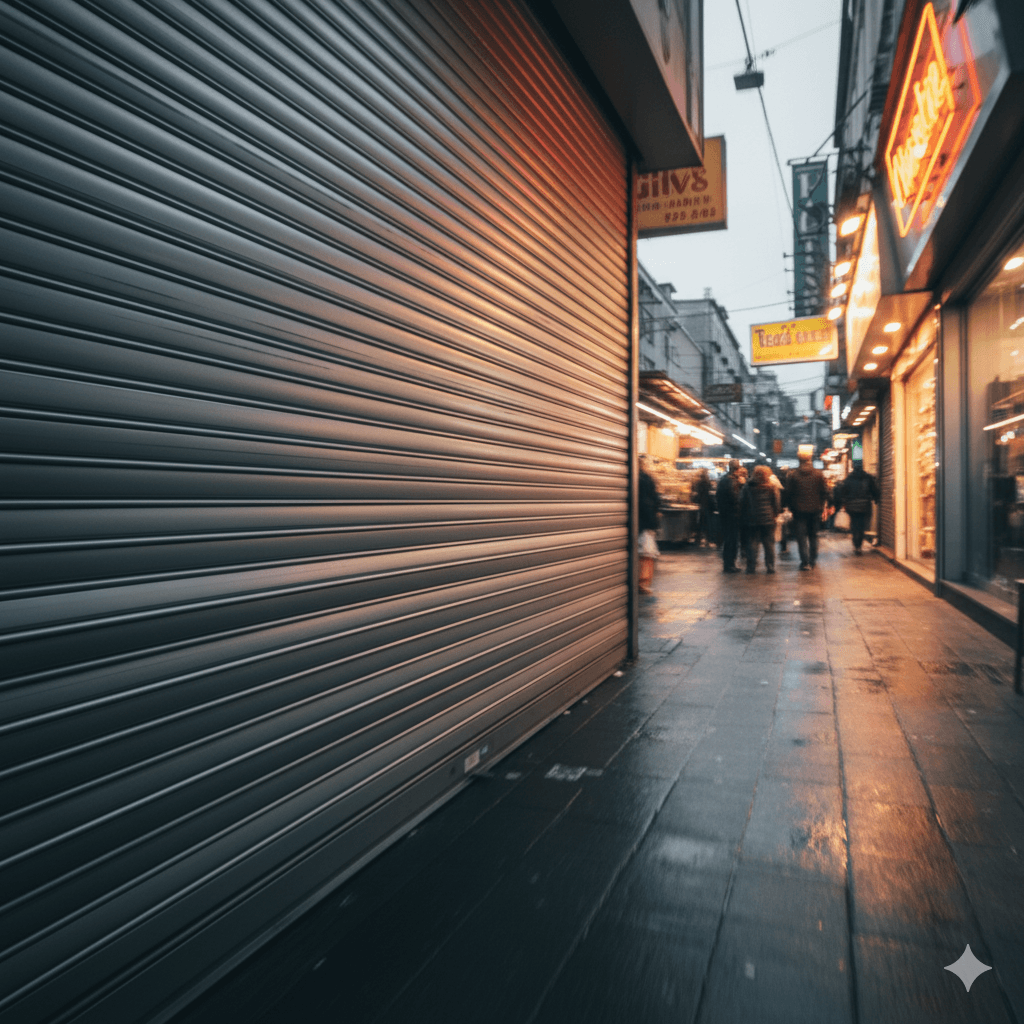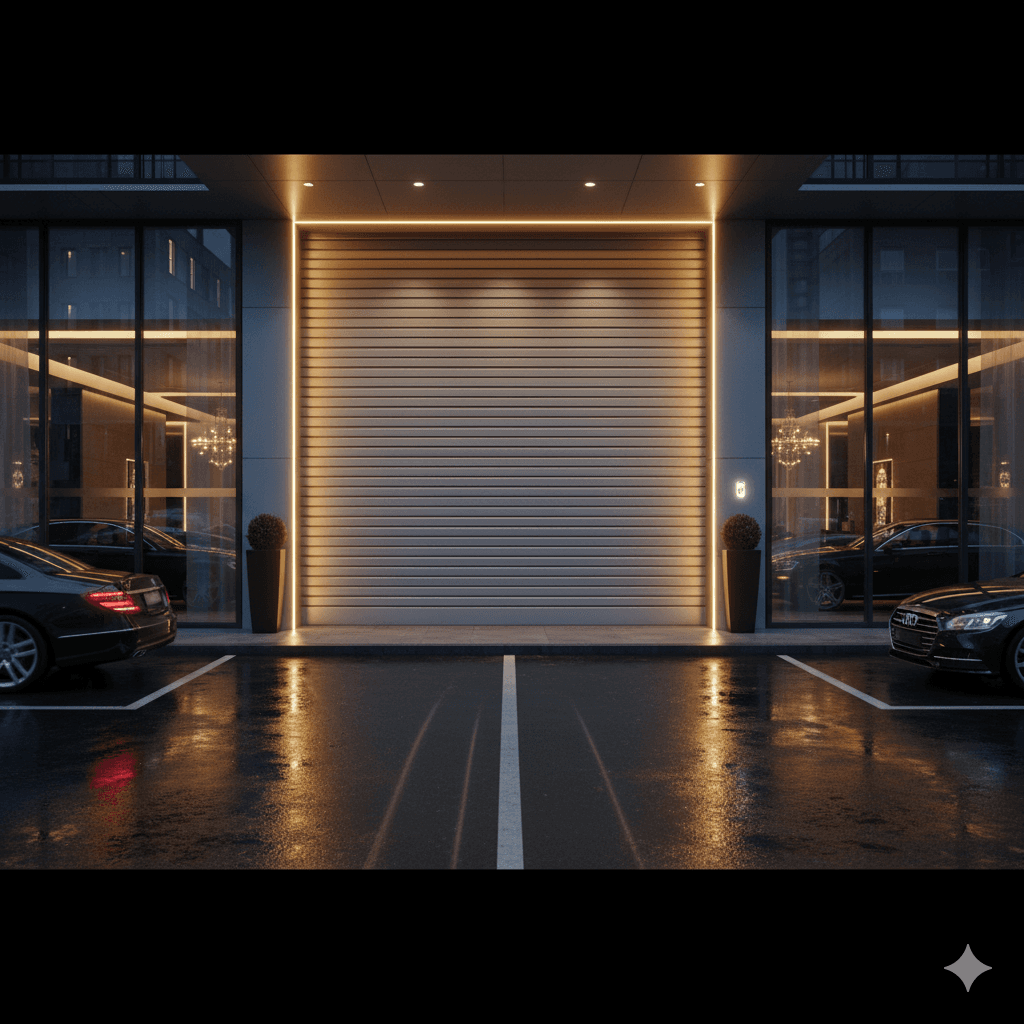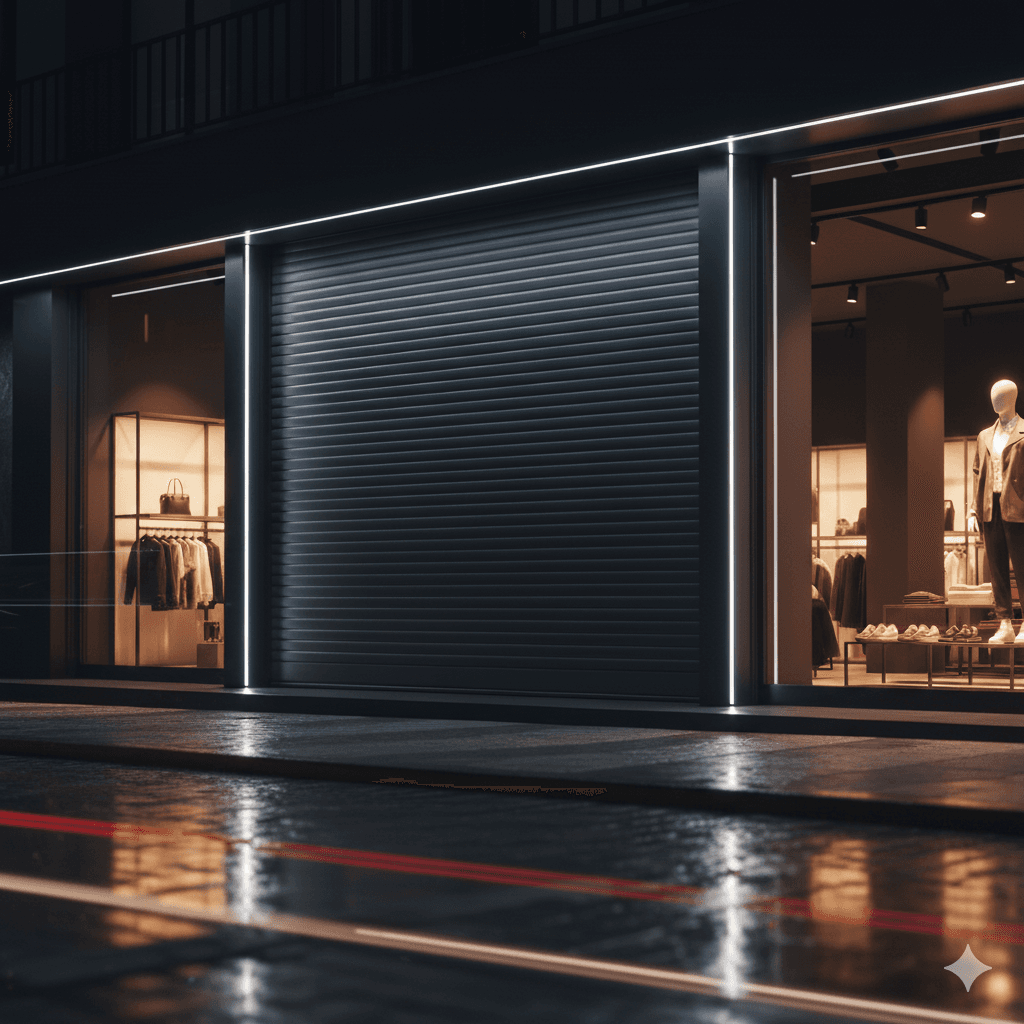
Short answer: Rolling shutter systems are closure systems that open as slats wind around a barrel in a box above the opening. Galvanized steel roller shutters, aluminium roller shutters and aluminium window shutters belong to this group. They provide security, thermal and acoustic insulation and the convenience of motorised operation without reducing usable space, and are used on shopfronts, warehouses, industrial buildings and residential facades.
A shop's roller shutter that closes at night, a warehouse's dispatch door or the window shutter of an apartment: although they look like different products from the outside, they all work on the same mechanical principle. In this article we look in detail at how rolling shutter systems work, what parts they consist of, which product suits which need and what to watch out for before buying.
How does a rolling shutter system work?
The basis of a rolling system is horizontal slats that interlock with one another. The slats move up and down in the guide rails on either side of the opening. When the system opens, the slats wind around the barrel inside the box at the top of the opening; when it closes, the same barrel turns in the opposite direction and lowers the slats along the rails. Because no outward or inward opening space is needed, as with a door leaf, the area in front of and behind it remains fully usable.
Main components
- Slat: The horizontal profile that closes the opening. Depending on the material, it can be galvanized steel, extruded aluminium or polyurethane-filled aluminium.
- Barrel and box: The barrel around which the slats wind and the box surrounding it. The box sits above the opening, requiring only a small amount of headroom.
- Guide rail: The rail that guides the slats on both sides and holds them against wind and forced entry. A brush seal reduces friction and dust ingress.
- Drive: Manual operation (strap, pulley, crank) or motorised operation (tubular motor, central motor, side motor).
- Control and safety: Remote control, key switch, smartphone control; safety equipment such as a photocell, bottom safety edge and obstacle detection.
Each of these components is selected according to the size of the opening and the usage scenario. Pack Door manufactures rolling systems to measure at its production facility in Tuzla; rather than forcing a standard size into the opening, the slat length, barrel diameter and box size are determined for each project.
What types of rolling shutter systems are there and how do they differ?
Pack Door's rolling systems group consists of three products. All three work on the same coiling principle; they differ in material, slat size and intended application.
| Product | Slat material and size | Key feature | Typical use |
|---|---|---|---|
| Galvanized steel roller shutter | Hot-dip galvanized steel; 77 / 97 / 115 mm, 0.75–1.20 mm wall thickness | High impact and burglary resistance, 2.00 mm guide rails | Warehouses, factories, high-street shops, industrial zone hangars |
| Aluminium roller shutter | Extruded or roll-formed aluminium; 55 / 77 / 100 mm | Rust-free, lightweight, anodised and RAL colour options | Shopfronts, office building entrances, coastal facilities |
| Aluminium window shutter | Polyurethane-filled aluminium; 37 / 39 / 45 / 55 mm | Thermal insulation, privacy, light control, 20+ colours | Windows in homes, villas, offices and hotels |
The key distinction between a roller shutter and a window shutter
A roller shutter is generally designed for wide openings such as doors and shopfronts, and its priority is physical security. A window shutter, on the other hand, provides thermal insulation, daylight management and privacy for window-scale openings. The galvanized steel roller shutter is also available with polyurethane-filled slats; this series combines security and insulation in places such as shops and garages. If you want to look at window shutters in more detail, see our article explaining which needs window shutter systems meet.
Where are rolling shutter systems used?
Because the rolling design requires no opening space and stores compactly in a box, it can be used in a wide range of buildings:
- Retail: High-street shops, pharmacies, boutiques and shopping centre service corridors. With perforated or vision slats, window displays can continue even when the shop is closed.
- Warehousing and logistics: Dispatch doors with forklift and pallet traffic, bonded warehouse docks. Here the impact-resistant galvanized steel roller shutter comes to the fore.
- Industry: Factory entrances, automotive service centres, industrial zone hangars. For wide openings and wind loads, 115 mm slats and a powerful barrel and motor combination are used.
- High-security locations: Jewellers and bureaux de change. Thick-walled steel or thick-walled extruded aluminium slats are fitted together with a reinforced locking profile.
- Coastal and humid environments: In areas with salty air, humidity and chemical vapours, the rust-free aluminium roller shutter offers a longer surface life.
- Residential: Window shutters on windows; roller shutters with polyurethane-filled slats and a quiet tubular motor in villa garages.
What should you look for when choosing a rolling shutter system?
The right system is determined by assessing the opening size, frequency of use, security expectations and environmental conditions together. Clarifying the answers to the following questions before the site survey speeds up the process:
- What is the priority? Protection against burglary, thermal and acoustic insulation, or shopfront visibility? Where security is the priority, thick-walled galvanized steel comes to the fore; where insulation is the priority, polyurethane-filled slats.
- How wide is the opening and how exposed is it to wind? For wide and windy openings, 97–115 mm slats and an industrial motor are selected; an intermediate post is added if necessary.
- How many times a day will it open and close? For doors with frequent cycles, a high-cycle central motor and a safety brake are recommended.
- What are the environmental conditions? If there is a coastal location, humidity or chemical vapour, aluminium should be considered.
- Are there facade or corporate identity expectations? RAL powder coating or anodised options should be planned to match the facade and window frame colours.
- How will it open during a power cut? A manual opening mechanism and, if necessary, a battery unit or an externally accessible key-operated emergency release box should be included in the project from the start.
Note from the field: One of the first things we look at during a site survey is the headroom, that is, the space above the opening where the box will sit. If there is not enough room for the box, it is mounted externally on the facade or some of the opening height is given up. If this decision is not made at the outset, there will be surprises on installation day. The second critical point is whether the floor is level; on a sloping threshold, the bottom slat does not sit fully, a gap remains underneath and both security and insulation are weakened.
Common mistakes
- Choosing a product by size alone: Two openings of the same size require different slats and motors if one is on a quiet street and the other in a hangar exposed to wind.
- Undersizing the motor: A motor with insufficient torque for the slat weight runs under strain and has a shorter life.
- Treating safety equipment as optional: A photocell and bottom safety edge are basic equipment for the safety of people and vehicles in motorised systems.
- Forgetting a manual opening solution: Being trapped inside or unable to open the shop during a power cut is one of the most common complaints.
- Postponing maintenance: In systems where the rails are not cleaned and adjustments are not checked, noise increases and the motor runs under load.
- Mistaking an ordinary roller shutter for a fire compartment: In openings that require fire compartmentation, an EI-classified fire-rated roller shutter must be used rather than a standard shutter.
Frequently asked questions
What is the difference between a rolling shutter system and a sectional door?
In a rolling system, narrow slats wind around a barrel and are stored in a box. In a sectional door, wide panels slide along tracks towards the ceiling into a horizontal position. A rolling system uses less headroom and ceiling space; a sectional door is generally preferred in industrial and garage applications where higher thermal insulation is the goal.
Can a manual rolling shutter system be motorised later?
In most cases, yes. For window shutters, conversion can be done by fitting a tubular motor that suits the existing barrel, and the box usually does not need replacing. For roller shutters, the right motor type is determined during the site survey according to the slat weight and barrel design.
How long does rolling shutter installation take?
A single roller shutter is usually installed on the same day, depending on site preparation; a single window shutter takes about 3–4 hours. For projects with multiple doors or windows, the schedule is finalised after the site survey.
Which areas do you serve?
Based in Tuzla, Pack Door operates a service network across all 39 districts of Istanbul and offers a 24/7 breakdown line. Project-based services are provided across Türkiye, particularly in Kocaeli, Ankara, Izmir, Bursa, Tekirdağ and Sakarya.
Conclusion and next step
Rolling shutter systems fall into three main products, the galvanized steel roller shutter, the aluminium roller shutter and the aluminium window shutter, all based on the principle of closing an opening without reducing usable space. The right choice is made by assessing the security and insulation priority, opening size, wind load, daily cycle count and environmental conditions together. To apply the field knowledge gained from over 24 years of experience and more than 15,000 projects to your opening, you can submit a free site survey request and receive a preliminary quote within an average of 1 hour by sharing dimensions and photos.