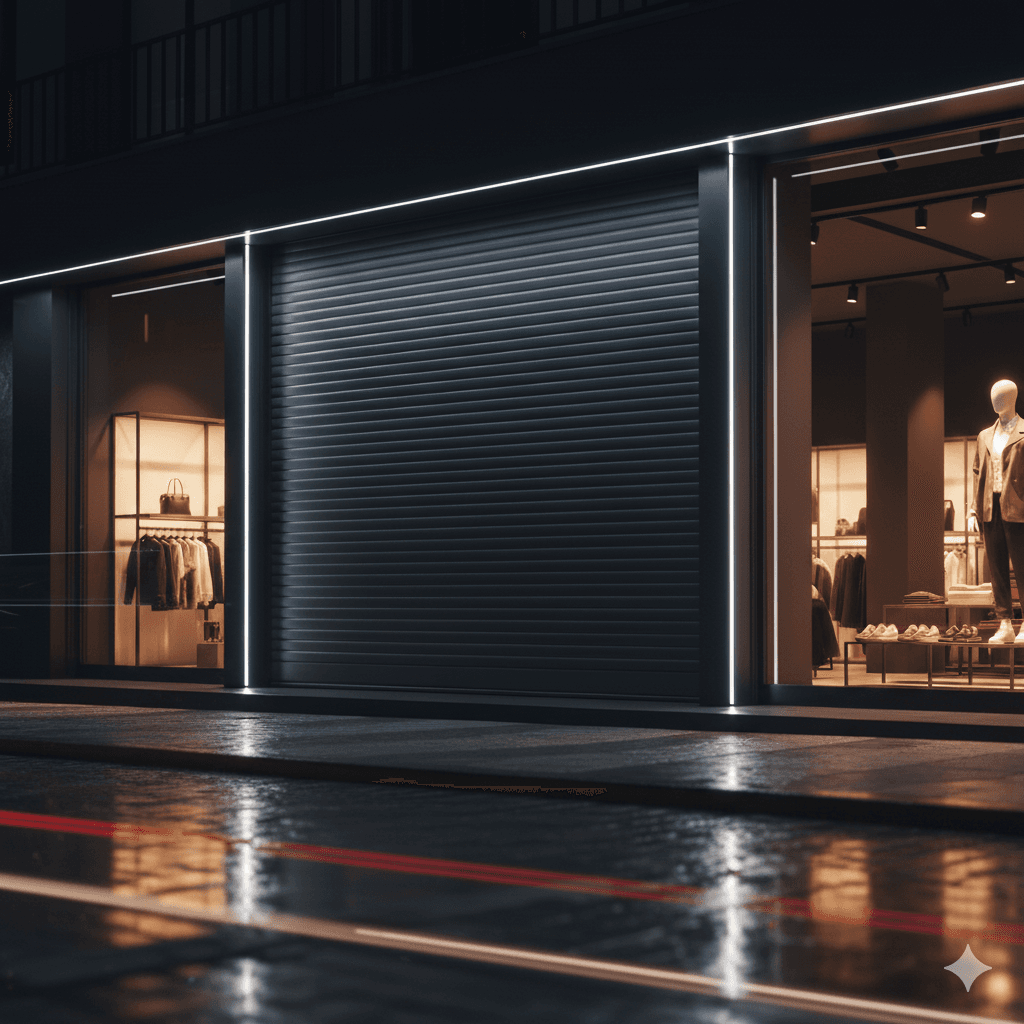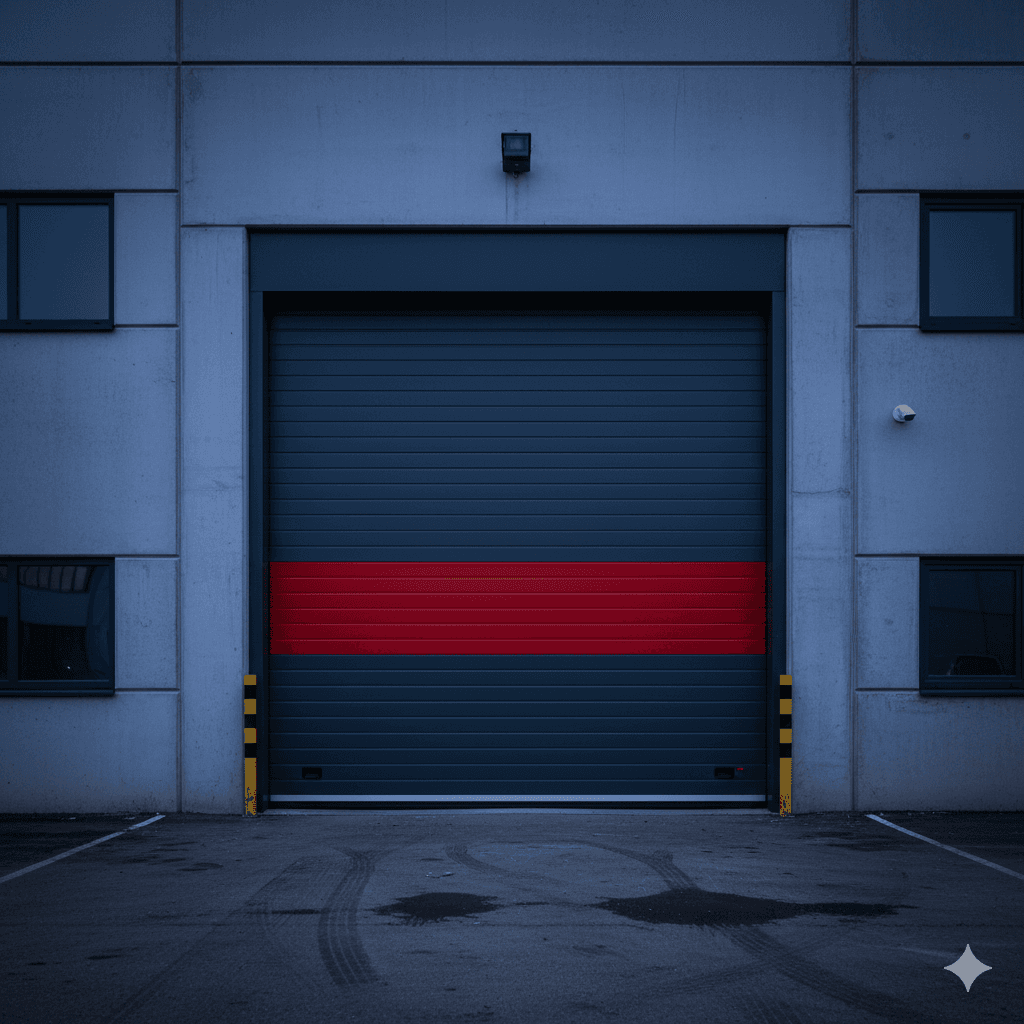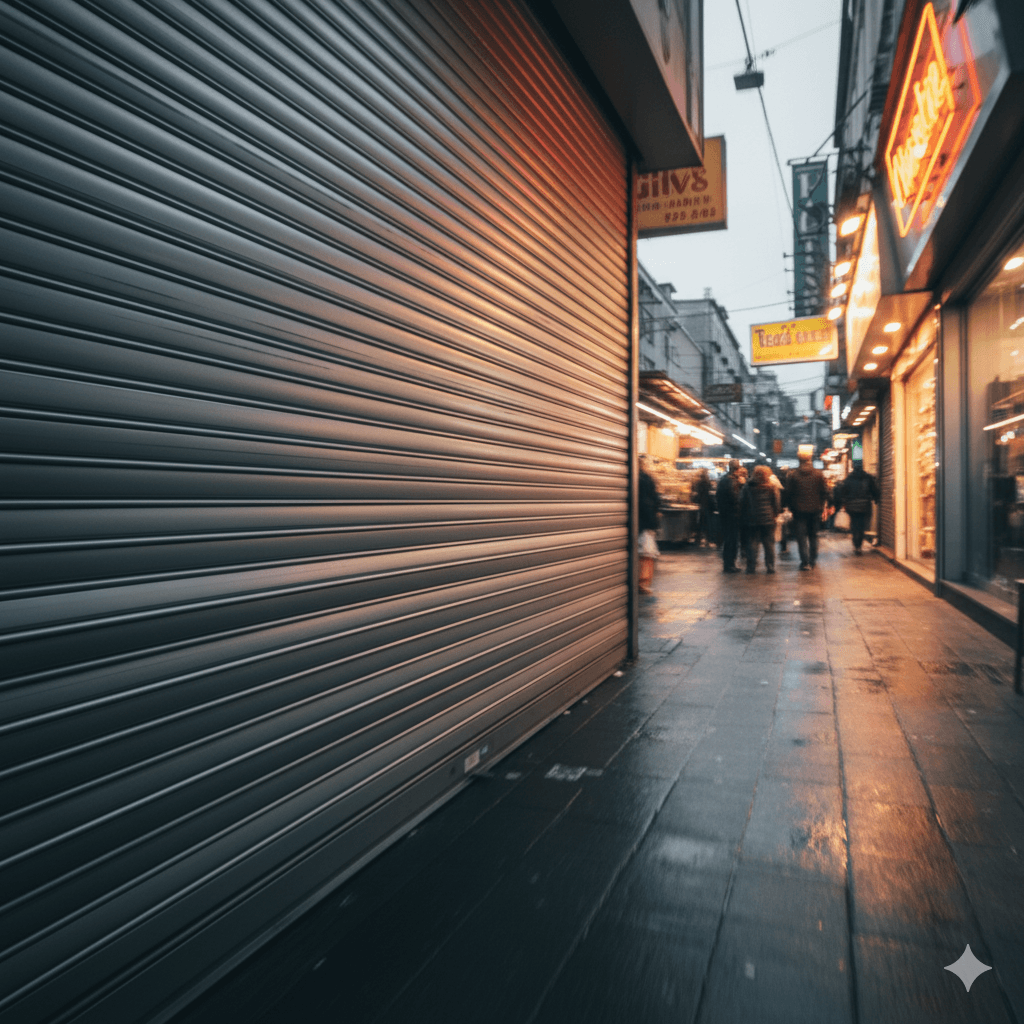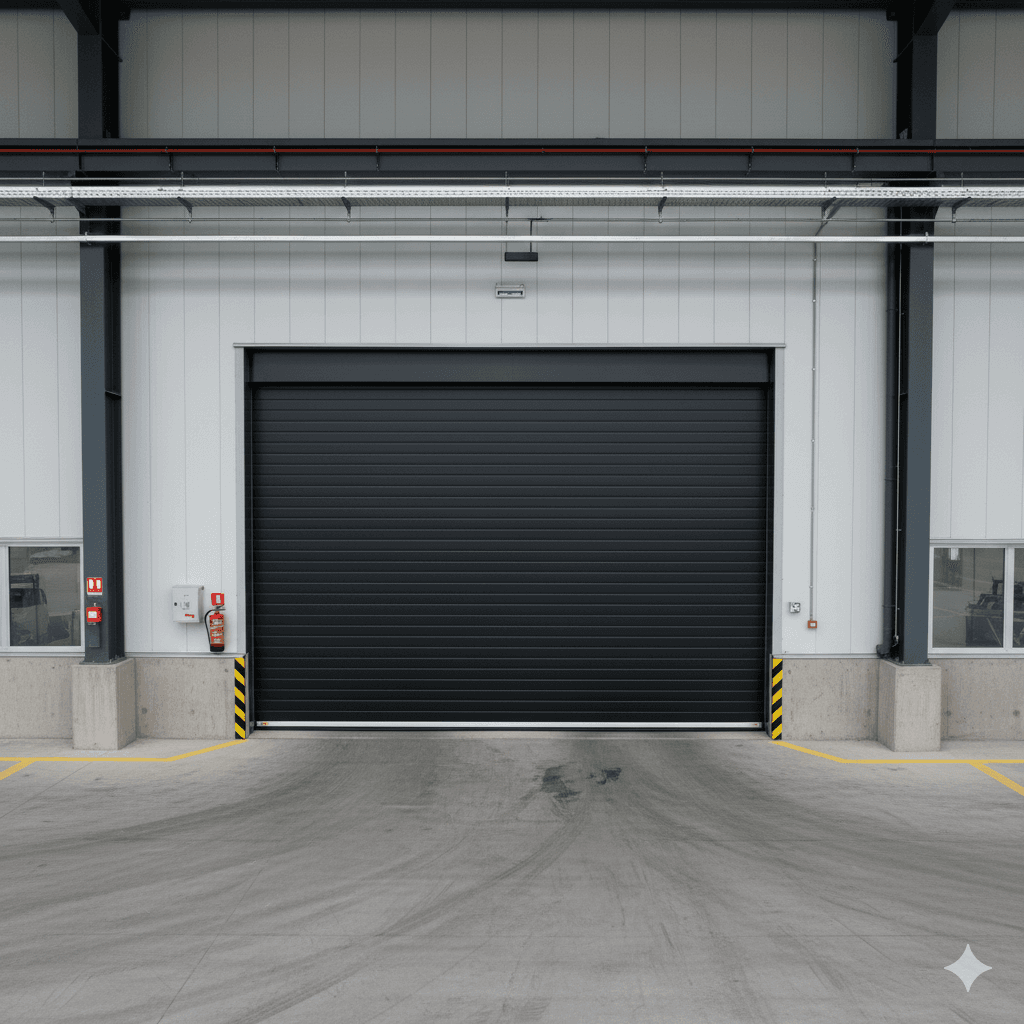
Short answer: There are two finish options for aluminium roller shutters: anodising (natural, bronze, black) and electrostatic powder coating across the full RAL colour chart. RAL powder coating is preferred for matching corporate colours, while anodising is chosen for a metallic, natural look. When the slats, box and guide rails are selected to the same colour plan, the shutter blends in with the façade and window frames.
A roller shutter is as much the face a shop or office building presents to the street from evening until morning as its shop window is during the day. Covering a large part of the façade when closed, a shutter with the right colour and finish becomes an architectural element that carries the brand's visual identity; with the wrong choice, it looks like a foreign object breaking up the façade. In this article we cover the colour and finish options for aluminium roller shutters, ways to plan façade harmony and common mistakes.
What colour and finish options are available for aluminium roller shutters?
Anodising
Anodising is the electrochemical thickening of the natural oxide layer on the surface of aluminium. The colour does not sit on top as a layer of paint; it lies within the oxide layer. As a result, an anodised surface retains the metallic texture of aluminium. Pack Door aluminium roller shutters are available in natural, bronze and black anodised finishes. They stand out when the aim is a look that complements metal window frames, glass façades and minimalist architectural lines.
Electrostatic RAL powder coating
In electrostatic powder coating, paint in powder form is held on the surface by an electrical charge and then cured in an oven. Because it can be applied in any colour on the RAL chart, an exact match with corporate colour codes is possible. A powder-coated surface is resistant to UV rays and the weather, and retains its colour against fading for a long time. Texture preferences, such as a matt or glossier finish, should also be specified alongside the colour code; the same RAL code can look different on a façade at different gloss levels.
| Criterion | Anodising | Electrostatic RAL powder coating |
|---|---|---|
| Colour options | Natural, bronze, black | Full RAL colour chart |
| Appearance | Metallic, aluminium texture retained | Solid colour, exact match with corporate colour |
| Corporate identity match | Limited colour range | Can be chosen to the brand colour code |
| Weather resistance | Protective oxide layer on rust-free aluminium | Resistant to UV and weather, fade-resistant |
| Typical application | Office buildings, glass façades, showrooms | Chain stores, pharmacies, boutiques, corporate façades |
How do you choose a colour that suits the façade?
Shutter colour should not be considered in isolation but together with the other components of the façade. The following steps make the colour decision systematic:
- Identify reference surfaces: Note the colours of the window frames, façade cladding, signage and awning. The shutter should match one of these surfaces or create a deliberate contrast.
- Confirm the corporate colour code: In chain store or franchise structures, the RAL code from the brand guidelines is used.
- Consider the closed and open appearance separately: During the day the shutter is rolled up in its box and only the box and guide rails are visible; at night the entire curtain covers the façade.
- Select the slats, box and guide rails to the same plan for consistency: Aluminium shutter boxes are produced to match the façade; leaving the box and guide rails in a different colour creates a framing effect when the shutter is closed.
- Assess the environmental conditions: On façades facing direct sunlight, dark colours heat up more at the surface; this should be taken into account when choosing.
- Approve with a sample: A colour on screen or in a catalogue can look different in daylight; where possible, decide on the basis of a physical sample.
How are window display and colour planned together?
The KM Vitrin series uses micro-perforated or polycarbonate vision-panel slat combinations. In this case the colour decision is made together with the shop's night-time lighting: a light-toned curtain reflects more of the night light, while a dark-toned curtain makes the product display behind the vision-panel slats stand out. The ratio of solid to perforated slats is also a design decision that shapes the façade's night-time appearance.
Colour approach by application
- Chain stores and franchises: The RAL code from the brand guidelines is the basis; using the same shade across all branches ensures corporate consistency.
- Office buildings and corporate façades: To complement glass façades and metal frames, natural or black anodising, or a RAL shade matching the window frames, is preferred.
- Pharmacies and boutiques: On the ground floor of residential buildings, calm tones that suit the building façade balance the streetscape.
- Coastal premises: The advantage of rust-free aluminium is combined with a regularly cleaned anodised or powder-coated surface to maintain long-lasting aesthetics.
Is architectural harmony only about colour?
No. Proportion and detailing shape the perception of the façade as much as colour does:
- Slat profile: 55, 77 and 100 mm slat options create different line rhythms on the façade. Narrow slats give a finer, denser texture; wide slats give a cleaner, larger-scale look.
- Box position: Whether the box is surface-mounted on the façade or concealed within a suspended ceiling or lintel directly affects the shutter's daytime appearance.
- Guide rail alignment: Aligning the guide rails with the window frame profiles prevents the shutter from looking like an "afterthought" on the façade.
- Made-to-measure production: When the slats, box and guide rails are manufactured to size, they sit on the façade without gaps.
Note from the field: The situation we encounter most often in colour selection is the shutter being considered only in terms of slat colour, with the box and guide rails left in a standard colour. When the shutter is closed, this difference is immediately noticeable. That is why, during the site survey, we assess photos of the façade with both its daytime and evening appearance in mind, and check whether there is a lintel or suspended ceiling void in which the box can be concealed. In corporate projects, confirming the colour code in writing prevents post-production debates about "shade differences".
Common mistakes
- Choosing the colour on screen: There can be a marked difference between the shade on a monitor and the actual surface.
- Forgetting the box and guide rails: A framing effect appears when the shutter is closed, and façade consistency is lost.
- Choosing a colour that competes with the signage: When the shutter and signage carry colours of the same intensity, the façade looks cluttered.
- Neglecting surface treatment in coastal environments: Aluminium does not rust, but an anodised or powder-coated surface and regular cleaning are needed for lasting aesthetics.
- Leaving the colour decision until after production: Because shutters are made to measure, the colour must be finalised at the order stage.
Frequently asked questions
How many colour options are there for aluminium roller shutters?
Anodised finishes are available in natural, bronze and black. With electrostatic powder coating, the full RAL colour chart can be used, so corporate colour matching can be achieved for each project.
Does a powder-coated shutter fade over time?
A powder-coated surface is resistant to UV rays and the weather, and retains its colour against fading for a long time. Cleaning the surface regularly helps preserve its appearance.
Can the shutter colour be changed later?
A more permanent colour change is achieved by remanufacturing the slats in the new colour rather than painting on site. That is why the most practical approach is to decide the colour at the initial order, together with the façade plan.
Conclusion and next step
Choosing the colour and finish of an aluminium roller shutter correctly means considering together the difference between anodising and RAL powder coating, the reference colours on the façade and the consistency of the slats, box and guide rails. To preserve the colour and finish for years, take a look at our aluminium roller shutter maintenance and lifespan guide; for the product's general features, our article what is an aluminium roller shutter is also a helpful guide. Series and technical details can be found on the aluminium roller shutter page; for a colour and finish plan that suits your façade, you can submit a free site survey request.