Short answer: Thanks to its lightweight slats, an aluminium roller shutter puts little strain on the motor and runs quietly and smoothly; remote control, timers and smartphone control shorten the opening and closing routine, while perforated or vision-panel slats keep the shop window on display outside business hours. Its rust-free construction reduces maintenance-related downtime; together, these effects translate into greater business efficiency.
For most businesses, a roller shutter is seen simply as "the security curtain pulled down at closing time". Yet a shutter is equipment used at least twice a day that affects staff time, customer perception and night-time security all at once. In this article we look at how choosing an aluminium roller shutter affects operations in shops, pharmacies, showrooms, office buildings and multi-branch chains, and which indicators can be tracked to measure efficiency. We approach the subject not from technical product specifications but from the business's daily workflow.
Where does an aluminium roller shutter save a business time?
Time savings depend on how the system fits into the daily routine. Three points stand out in the field.
Opening and closing routine
With a manual shutter, opening involves unlocking, lifting the shutter by hand and securing it. With a motorised aluminium roller shutter, the process comes down to a single button. Staff can deal with the till, lighting or product display while the shutter opens. In corner shops with more than one opening, planning remote control and push-button positions from the outset, rather than opening each shutter separately, noticeably simplifies the routine.
Timer and remote control
With a Wi-Fi module and smartphone integration, the shutter can be opened and closed even when the owner is not on site. A timer can be set to open and close automatically at set times. This prevents disruption when the member of staff responsible for opening is late, or when keys have to be handed over at shift changes. For owners who cannot be sure whether the shutter was lowered after closing, the option to close it from a phone provides additional peace of mind.
Quiet, smooth operation
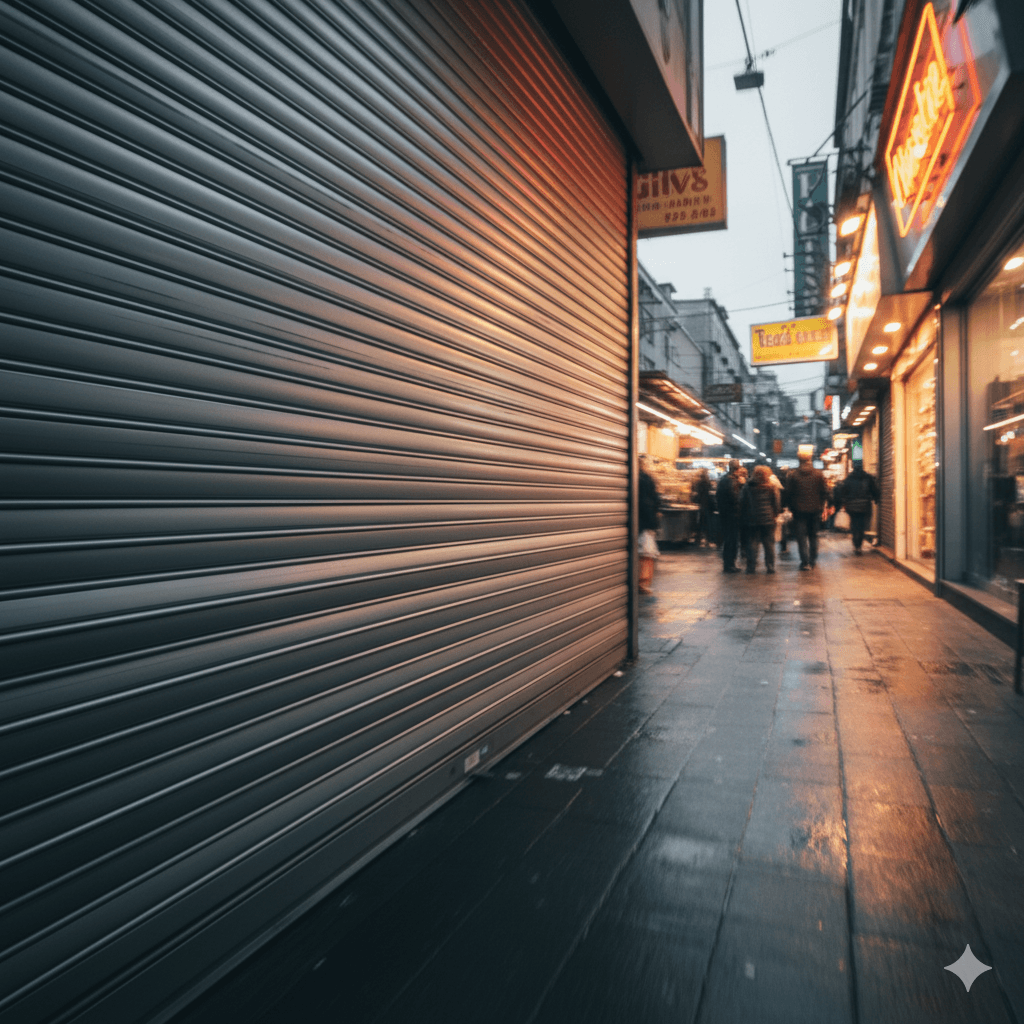
Extruded aluminium slats are markedly lighter than their steel equivalents. The lower weight reduces the load on the motor and shaft, so the shutter moves more quietly and smoothly. Early in the morning or late at night, in shops beneath residential flats, this is also a tangible advantage for good relations with neighbours. In businesses where quiet closing matters, such as pharmacies and boutiques, this feature often decides the choice.
How does a window display contribute to sales?
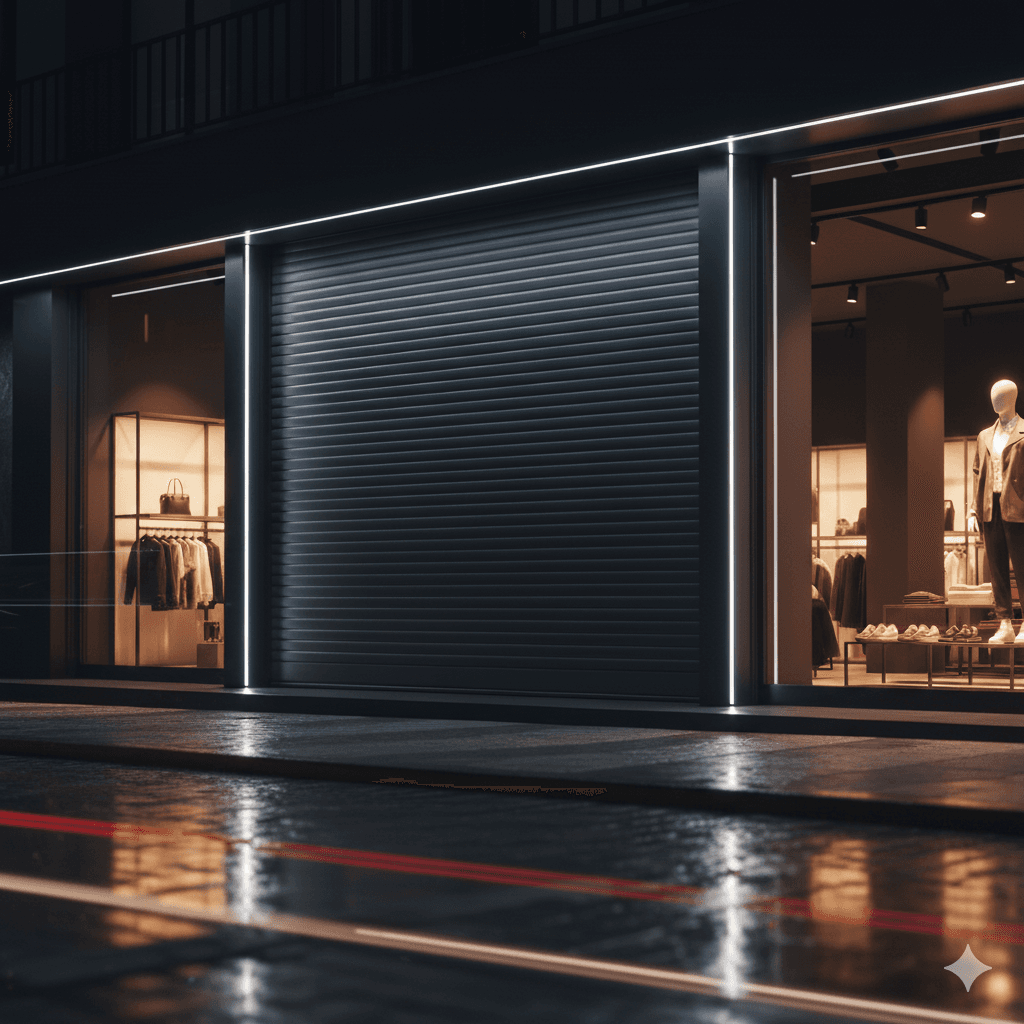
A fully solid shutter hides the shop window completely once the shop closes. In high-street retail, the evening can be a period of heavy footfall; if the window is not visible during this time, a promotional opportunity is lost. In the KM Vitrin series, micro-perforated or polycarbonate vision-panel slat combinations keep products visible even when the shutter is down. The perforated design also provides natural ventilation, so air keeps circulating in the closed shop.
Perforated, vision-panel and solid slats can also be combined in the same shutter. For example, the lower section can be solid for impact resistance and privacy, while the eye-level section is perforated or fitted with vision panels for display. This configuration strikes a balance between security and display tailored to the business. Combined with a corporate RAL colour, the shutter becomes a façade surface that carries the brand identity even when the shop is closed; we cover the relationship between colour choice and architecture separately in our article on aluminium roller shutter colour options and architectural harmony.
Which configuration suits which type of business?
Efficiency comes from configuring the product around the business's real needs. The table below offers a starting point based on the usage scenarios in our catalogue; the final configuration is determined during the site survey.
| Business type | Key requirement | Recommended configuration |
|---|---|---|
| High-street and shopping-centre shop | Night-time display, aesthetics | KM Vitrin, perforated or vision-panel slats |
| Pharmacy and boutique | Quiet closing, smart appearance | KM Aluminium, RAL-matched finish |
| Jeweller and bureau de change | High security | Heavy-gauge extruded slats, bottom lock, alarm integration |
| Office building entrance | Corporate façade harmony | Anodised finish or corporate RAL colour |
| Coastal premises | Salt air and humidity | Rust-free aluminium, anodised or powder-coated finish |
| Showroom | Display while closed | Vision-panel slat combination |
How can downtime from maintenance and faults be reduced?
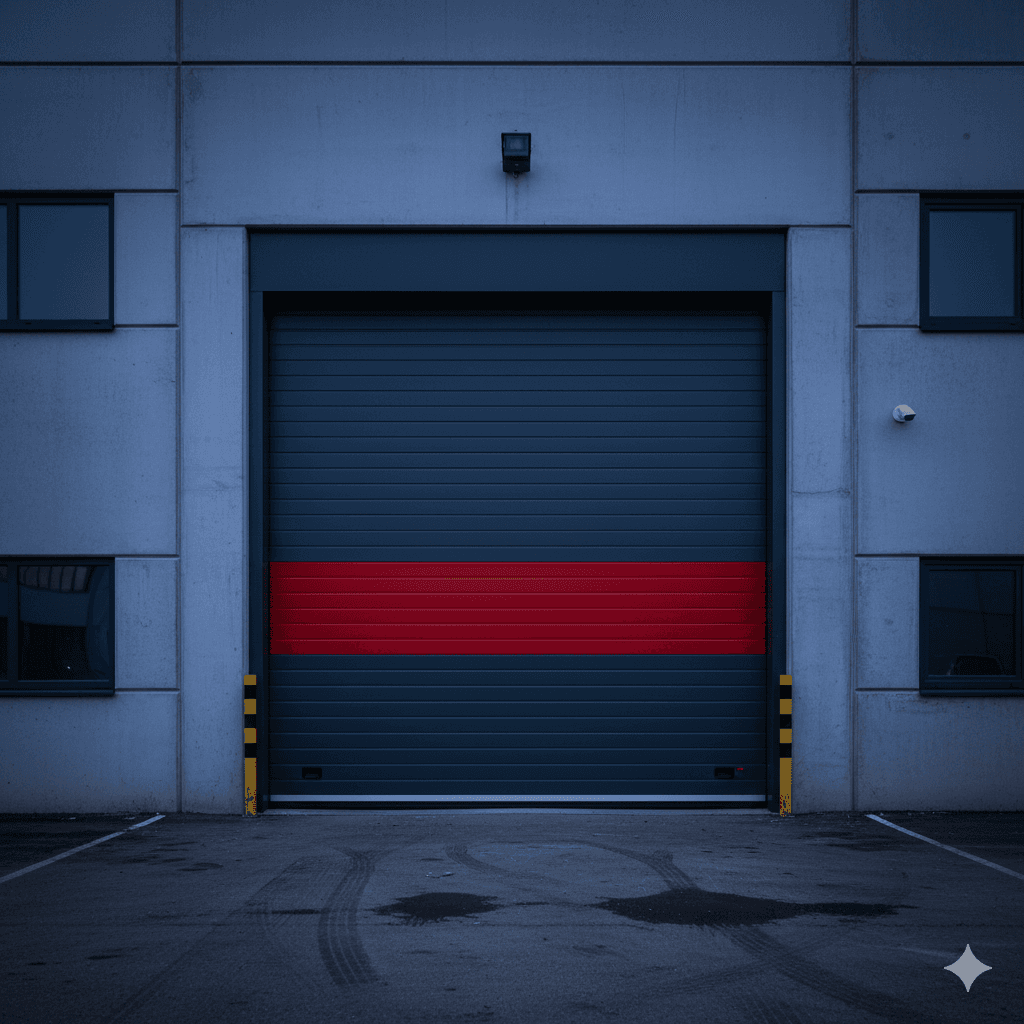
For a business, the most costly shutter fault is a shutter that will not open at opening time. In that case it is not just the service fee that counts, but also lost trading hours and customer perception. Because aluminium does not rust by nature, surface-related problems are reduced in coastal areas and environments with high humidity or chemical vapours. Lightweight slats do not strain the motor. Even so, what really ensures uninterrupted operation is regular maintenance and the right motor selection.
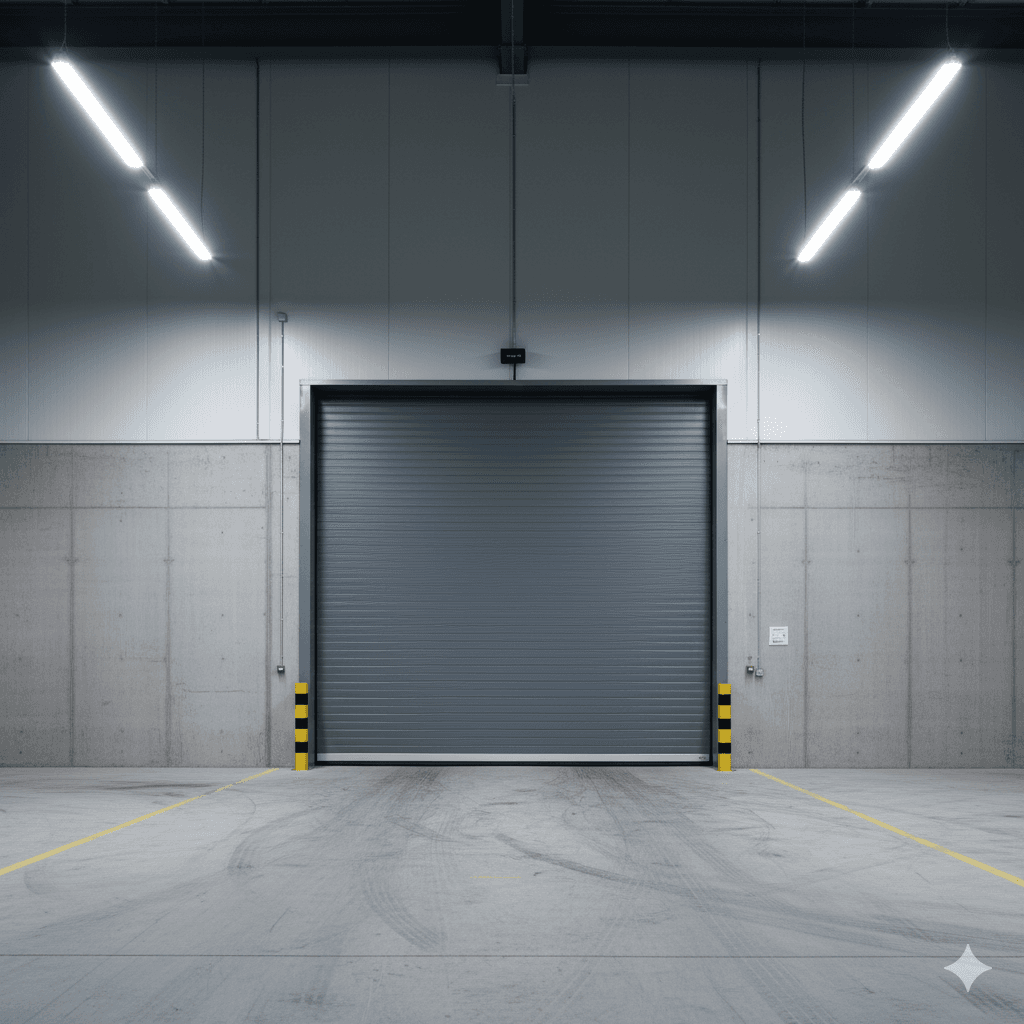
Safety equipment is also part of efficiency. Photocells, safety edges and obstacle detection prevent the shutter from striking a customer, member of staff or display product while closing. An accident means both damage and the business possibly having to close for a while. How the shutter will be opened during a power cut should also be discussed at the installation stage; the business's opening time should never depend on a power outage. Pack Door's 24/7 breakdown and emergency service line provides support for faults outside working hours.
Which indicators can you use to measure efficiency?
You do not need a complex system to see the impact of your shutter investment. A simple tracking sheet is enough:
- Opening and closing time: Compare the time staff spend operating the shutter before and after switching to a motorised system.
- Monthly stoppages and faults: Every unusual event recorded in the maintenance log is an indicator of system health.
- Number of service call-outs: A fall in call-outs outside annual planned maintenance shows that the maintenance plan is working.
- Visibility after closing: Is the window display working, and are you receiving enquiries about the shop in the evenings?
- Noise feedback: The status of noise complaints from neighbours and staff.
Note from the field: The first questions we ask during a site survey are not about the product; they are about what time the business opens, how many people use the shutter and who keeps the remote control. A common problem we see on site is the push button being placed in a hard-to-reach spot behind the shop window, or the only remote control staying with a single member of staff. These small planning gaps can cancel out the time advantage a motorised system provides.
Common mistakes
- Treating the shutter purely as a security product: The opportunity for window display and a corporate appearance is overlooked.
- Leaving remote control and push-button positioning until installation day: Unnecessary steps creep into daily use.
- Using different colours and slats across multiple branches: Façade consistency is lost in chain businesses.
- Carrying out maintenance only when a fault occurs: Unplanned downtime can strike at the busiest time.
- Not clarifying thermal insulation expectations: An aluminium roller shutter is a security and shopfront closure; if insulation is the priority, a different series should be considered.
For businesses that want to speed up customer entry during the day, a shutter alone is not enough; for touch-free entry during opening hours, it is worth also considering automatic sensor doors and the customer experience.
Frequently asked questions
Does an aluminium roller shutter save energy?
Aluminium roller shutters are chosen primarily for security, shopfront aesthetics and corrosion resistance. If thermal and acoustic insulation is the main goal, a double-walled, polyurethane-filled shutter series is considered. The right choice is made during the site survey based on the usage scenario.
Is the shop ventilated when the shutter is closed?
Yes, when micro-perforated slats are chosen. The perforated design allows natural air circulation and also makes a window display possible. With solid slats, airflow is limited.
Can the shutter be controlled from a smartphone?
Yes. With a Wi-Fi or smart home module, the shutter can be opened and closed from a phone app, and automatic times can be set with a timer. The remote control and wall switch remain in use.
How quickly will I receive a quotation?
Once the opening dimensions and a photo are sent, we respond within about 1 hour on average. If necessary, a site survey is arranged and an itemised quotation is prepared.
Conclusion and next step
When configured correctly, an aluminium roller shutter does more than provide night-time security; it shortens opening and closing times, keeps the shop window working outside business hours and reduces maintenance-related downtime. Efficiency is determined by the slat configuration, control options and a regular maintenance plan. To determine the right configuration for your business on site, request a free site survey.